
It’s a simple truth in modern dentistry—every practice needs a digital presence, and increasingly, that presence is shaped by video. If your practice isn’t showing up where patients are scrolling, researching, and comparing providers, you’re quietly losing visibility. Platforms like YouTube, Instagram, Facebook, TikTok, and LinkedIn have become part of everyday decision-making. Patients don’t just read about treatments anymore; they watch, listen, and evaluate before they ever call your office.
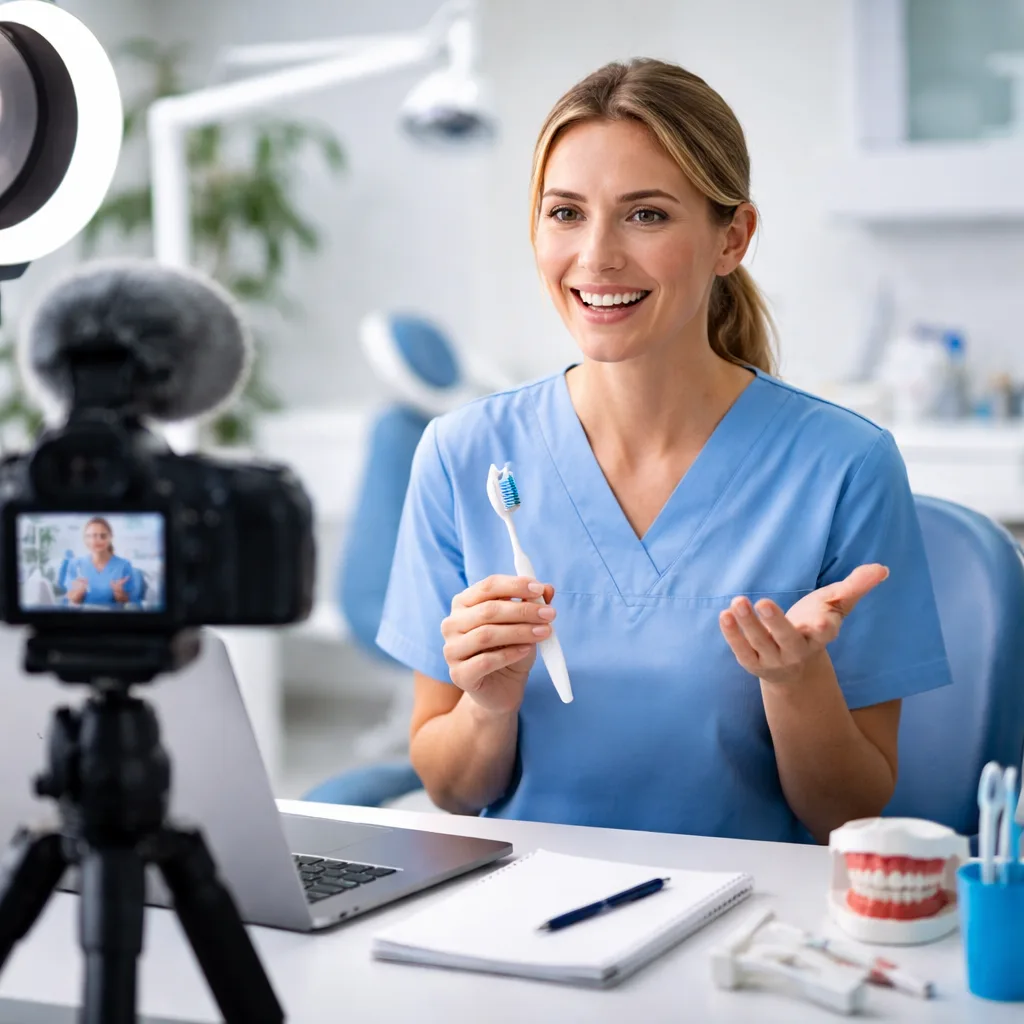
Yet for many dentists, the idea of stepping in front of a camera feels unnatural. You are trained to perfect clinical outcomes, not to perform for an audience. The good news? Building a strong video presence does not require theatrical confidence or studio-level production. It requires clarity, strategy, and a format that feels authentic to you.
So how can you embrace video marketing without forcing yourself into the spotlight? Below, we explore eight easy, practical video marketing tips designed specifically for dentists who prefer to stay behind the camera while still building authority, trust, and visibility in today’s competitive landscape.
One of the most effective video strategies does not require the dentist to record a single frame. Some of the highest-performing local healthcare videos are not produced in-house at all. They are created by trusted community voices who document their experience in a natural and unscripted way.
Instead of setting up cameras and lighting inside the operatory, invite a local parenting blogger, wellness creator, or neighborhood personality to visit the practice and share their journey from consultation to follow-up. Much like a screen recording tutorial walks viewers step by step through a process, influencer content walks their audience through a real patient experience from start to finish. The value lies in transparency and relatability.
These creators already understand how to film, edit, and publish engaging content across platforms like YouTube, Instagram, and TikTok. Plus, their audience trusts their recommendations, which will make the video feel like guidance rather than advertising.
When aligned correctly with the right demographic, this approach positions your dental practice as credible and approachable while removing the pressure of being on camera. It is strategic visibility built through trusted third-party storytelling. If you want to understand the broader impact of this approach, explore why dental video marketing is essential for modern practices competing online.
AI avatars are becoming popular due to their ability to provide a polished and professional-looking presence and significantly reduce the time and effort involved in producing video content. This type of solution allows dentists to share useful information with patients without having to stand in front of a camera, making it a practical and scalable option.
Engagement metrics across various industries suggest that results from now (throughout 2020) are promising. For example, AI-generated video ads deliver much higher levels of engagement than regular static social ads, with interactive formats delivering even higher levels of viewer engagement. Increased levels of engagement often correspond to improved conversion performance, and many brands have reported strong increases in the number of inquiries they receive and their click-through rates after using AI-generated videos in their advertising campaigns.
Just as compelling as the data supporting performance are operational advantages. These AI-generated video tools can "drastically reduce" production times for creating professional videos from written FAQs, treatment descriptions, and aftercare instructions for each procedure. Because of this, dentists can regularly publish information without compromising their clinical schedules.
Many platforms also support multilingual output, which makes it easier to communicate clearly with diverse patient communities across the United States. So, instead of worrying about lighting, retakes, or on-camera presence, the focus remains where it should be: on delivering accurate, reassuring information. For dentists who prefer to stay behind the scenes, AI avatars offer a modern, efficient way to maintain authority and visibility in an increasingly video-driven digital landscape.
As video continues to shape how patients evaluate healthcare providers, many dental practices are discovering that consistency matters more than occasional bursts of content. Rather than attempting to manage filming, scripting, editing, and publishing internally, a growing number of practices are choosing to work with a dedicated content creator who understands both video strategy and healthcare compliance.
So how does this approach work in practice?
Freelance videographers or part-time content specialists typically handle the entire production cycle. This includes identifying content themes based on patient FAQs, scripting clear and compliant messaging, filming in a way that feels natural inside a clinical environment, and editing videos into platform-specific formats. Short educational clips can be optimized differently for Instagram Reels versus long-form educational content on YouTube. Each platform requires a slightly different pacing, structure, and call to action.
A skilled healthcare content creator also understands tone. Dental videos should feel reassuring and credible, not overly promotional. Lighting, framing, and sound quality are handled professionally, ensuring the final product reflects the quality of care delivered inside the practice.
Most importantly, this model protects your time. The dentist remains focused on clinical responsibilities and patient outcomes, while the content creator ensures a steady stream of polished content aligned with broader dental marketing services.The result is a sustainable system where video marketing becomes an integrated extension of the practice rather than an added burden.
Every dental office has a predictable pattern of questions. Patients ask about pain levels, recovery time, insurance coverage, costs, sedation options, and how long results will last. These recurring conversations are not random. They are signals. They reveal exactly what your audience wants clarity on before booking an appointment.
Instead of answering the same questions repeatedly over the phone, transform those FAQs into short, focused explainer videos. A 60 second animated clip or a clean slide-based presentation can address one specific concern at a time. For example, “Does a root canal hurt?” or “How long do dental implants take from start to finish?” When structured clearly, these short videos feel helpful rather than promotional.
Animated visuals, simple diagrams, and calm voice narration can make complex procedures easier to understand. The goal is reassurance through clarity. Patients who feel informed are less anxious and more confident in taking the next step.
These short explainers can be shared across Instagram, YouTube, and Facebook, meeting patients where they are already searching for answers. When executed consistently, FAQ-based videos strengthen your overall dental content marketing strategy by repurposing patient education into high-visibility digital assets.
Not every effective video requires a talking head. In fact, some of the most informative dental videos rely entirely on strong visuals paired with calm, confident narration. For dentists who prefer to stay off camera, voiceover-driven content offers a simple and highly professional alternative.
Begin with HIPAA-compliant before and after images, treatment diagrams, digital scans, or short procedure animations. Then layer in a clear voice explanation that walks patients through what they are seeing. Explain the problem, outline the solution, and briefly describe what they can expect during and after treatment. The structure should feel educational and reassuring rather than promotional.
This format works particularly well for procedures such as dental implants, veneers, aligners, or full mouth rehabilitation, where visual transformation plays a key role. Patients are less concerned with cinematic production quality and more focused on understanding outcomes, timelines, and comfort levels.
Voiceover videos can be distributed across YouTube, Instagram, and Facebook, allowing your expertise to remain front and center even when you are not physically on screen. The result is clear communication, stronger trust, and a steady video presence without the pressure of performing for the camera.
A dental practice is never built around one individual alone. Patients interact with hygienists, treatment coordinators, assistants, and front desk staff at every stage of their visit. Featuring these team members in your video content can create a more welcoming and relatable digital presence without requiring the dentist to be the primary face of every recording.
Hygienists can explain preventive care tips or demonstrate proper brushing and flossing techniques. Treatment coordinators can walk through financing options or appointment processes. Front desk staff can introduce what a first visit looks like. These short, approachable videos feel conversational rather than clinical, which helps reduce anxiety for new patients.
When shared on platforms like Instagram, Facebook, and YouTube, this approach adds warmth and personality to your brand. It humanizes the practice, builds familiarity before the first appointment, and distributes visibility naturally across the team. The result is a balanced video strategy that feels authentic and community-driven, without placing all the spotlight on one person.
Patients rarely see what happens beyond the treatment chair, yet those unseen moments are often what build the strongest trust. Filming behind-the-scenes content allows a dental practice to showcase professionalism, hygiene standards, and advanced technology without requiring anyone to deliver a direct-to-camera monologue.
Capture short clips of sterilization protocols being followed with precision. Highlight new scanning technology in action. Record a quiet morning setup before the first patient arrives. Even a simple day-in-the-life montage that moves from reception to treatment room to team collaboration can communicate efficiency and care more effectively than a scripted speech.
These videos work especially well as short reels or stories on Instagram and Facebook or as slightly longer walkthroughs on YouTube. Soft background music, subtle captions, and natural ambient sounds can elevate the experience without overcomplicating production.
Behind-the-scenes content reassures potential patients that safety, cleanliness, and teamwork are prioritized daily. It transforms clinical processes into visible proof of quality care, strengthening credibility without placing pressure on anyone to perform on camera.
If a dental practice has already invested in SEO driven blog content, there is a valuable opportunity sitting unused. Each of these articles can become multiple short, educational video snippets without creating anything from scratch.
First, you need to identify the specific areas or sections of specific paragraphs in your blog article that can be made into a video. For example, a paragraph that discusses the value of clear aligners could be turned into a 45-second video explaining clear aligners, or a paragraph discussing the care protocols after treatment can easily be converted into a short checklist-style video. Rather than rewriting your blog content, just take the most useful and patient-friendly information and convert it into a short script, slide visual or voiceover.
These video snippets can then be shared on Facebook, TikTok, Instagram, and YouTube to provide cross-channel visibility. If an article has 1,000 words, by using a strategic breakdown, you can develop anywhere from five to ten micro videos from that article.
This approach strengthens digital presence while maintaining consistency in messaging. It extends the lifespan of existing content, supports SEO efforts with video signals, and ensures educational material reaches patients in the format they increasingly prefer to consume.
Screen recordings offer a practical way to educate patients without stepping in front of the camera. Instead of filming a traditional talking head video, record the computer screen while walking through essential processes with calm, clear narration.
Demonstrate how to book an appointment through the online portal. Guide viewers through financing options step by step. Explain how to access postoperative instructions or download patient forms. When patients can visually follow the process in real time, confusion decreases and confidence increases.
This format works particularly well for slightly longer educational uploads on YouTube, where patients often search for specific guidance. Screen recordings feel instructional rather than promotional. They position the practice as organized, transparent, and patient-focused.
Simple tools like screen capture software and a quality USB microphone are sufficient to produce clear, professional results. The emphasis remains on clarity and usefulness, proving that valuable dental video content does not require elaborate production or on-camera performance.
For dentists who prefer to stay off camera, shifting the focus from the face to the hands creates an elegant and highly professional alternative. Dentistry is a hands-on craft. Precision, control, and technique are what patients ultimately value. Filming close-up demonstrations using dental models, instruments, or aligner trays allows that expertise to take center stage without requiring direct eye contact with a lens.
Set up a clean, well-lit workspace. Position the camera above or slightly angled toward the treatment model. Record detailed demonstrations of flossing techniques, aligner insertion and removal, retainer care, or how a crown is placed on a model. While the hands perform the action, a calm voiceover can guide viewers step-by-step through the process.
This format feels instructional rather than promotional. It mirrors the way patients are educated chairside, which makes it familiar and reassuring. There is no pressure to perform facial expressions or deliver memorized lines. The emphasis remains on clarity, skill, and confidence.
Longer-form demonstrations can be structured as educational uploads on YouTube, where patients often search for practical guidance. Close-up visual detail combined with concise explanations builds credibility and reinforces clinical expertise without requiring a traditional on-camera presence.
Our healthcare marketing expert will get in touch with you

.gif)