SEO-optimized-telehealth-doctor-website
Thank you! Your submission has been received!
Oops! Something went wrong while submitting the form.
Remedo in the Spotlight

Remedo has been featured in numerous programs, highlighting its innovation in healthcare technology. Our impact continues to be recognized across industry-leading platforms.

Global Winner Google AI Chatbot Competiton 2021
Serving 8,000+ practices across US, Canada, UK & India

AWS Startups
Serving 8,000+ practices across US, Canada, UK & India

Google Partner
8000+ practices weorldwide trust us
Increase your dental practice's online visibility with proven marketing tactics

Most practice owners already know they should "do SEO." What they rarely get is a straight answer about what the work actually involves, how long it takes, and why a general marketing agency keeps missing the mark. Remedo works with dental practices only. That focus is the whole point, and it shows up in every part of how we run dental SEO.

If you want the short version: we audit where you stand, fix the technical and local foundations, build content around how real patients search, and earn the trust signals Google and AI engines look for. Then we track it against booked patients, not vanity rankings.

What Dental SEO Services Actually Include

There is a lot of hand waving in this industry. Here is the plain breakdown of what a real dental SEO program covers, and why each piece matters for a practice trying to fill its schedule.

Local SEO and Google Business Profile

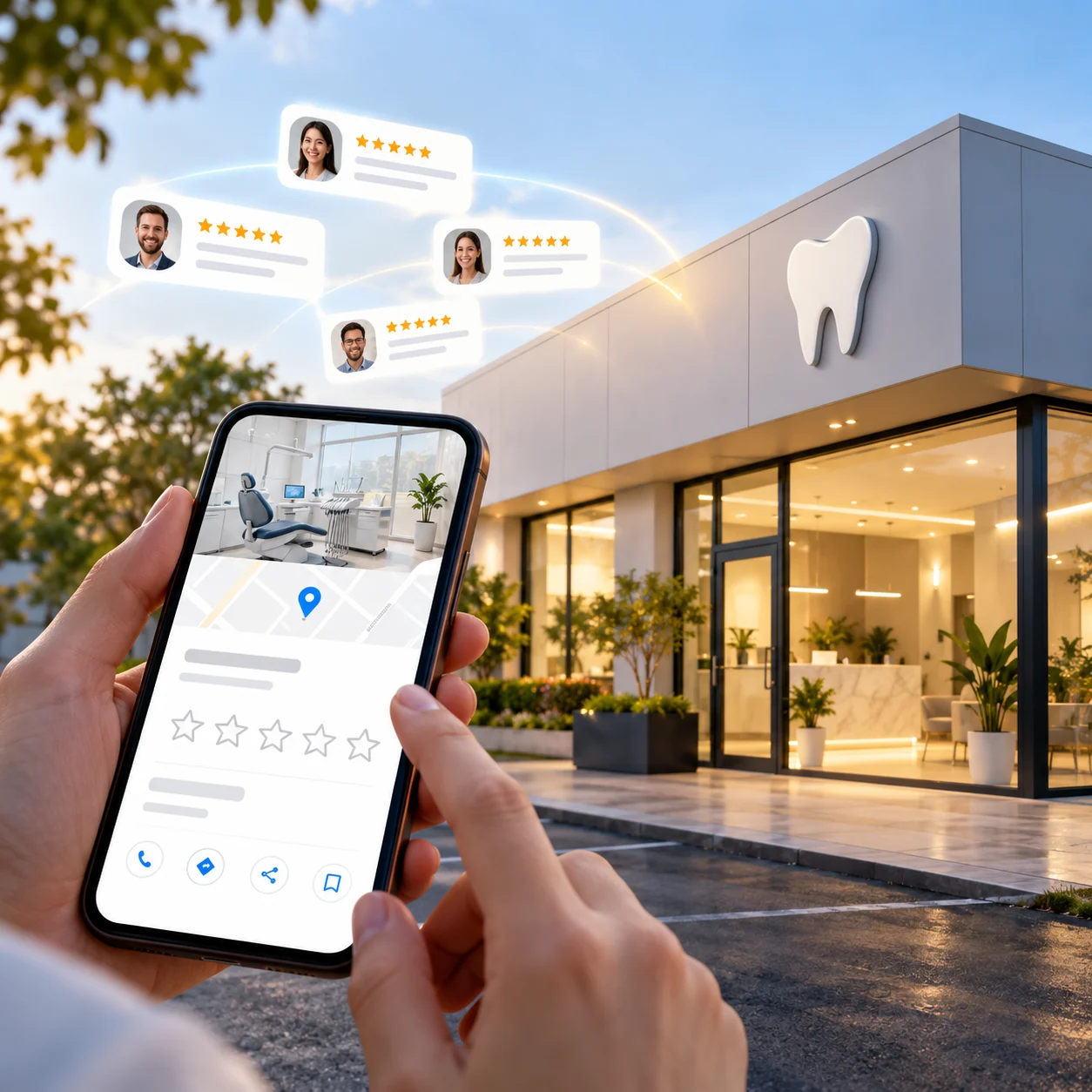
For a dental practice, local search is the engine. When someone types "dentist near me" or "emergency dentist [city]," Google leans heavily on proximity, your Google Business Profile, and your review signals to decide who appears in the map pack. A practice that ranks first organically but sits fourth in the map pack still loses most of the clicks.

Local SEO work covers claiming and fully completing your Google Business Profile, keeping your name, address, and phone number consistent across every directory, building out service and location details, and steadily earning genuine patient reviews. Reviews are not a side project here. They influence rankings and they influence whether a patient picks you over the practice next door. We go deeper on this in our guide to the impact of patient reviews on SEO.

Technical SEO for Dental Websites

Technical SEO is the part patients never see and most dental sites quietly fail. If your pages load slowly on a phone, if your service pages are thin or duplicated across locations, or if Google cannot cleanly crawl and index your site, none of your content will rank no matter how good it is.

For dental practices the common technical problems are predictable: bloated Webflow or WordPress templates that drag down mobile speed, near duplicate location pages that compete with each other, missing or broken schema markup, and orphaned pages that nothing links to. Fixing these is unglamorous and it is often where the fastest gains hide.

Mobile speed deserves special attention. The majority of dental searches happen on a phone, often from someone in pain who will not wait for a slow page to load. If your site takes more than a few seconds to become usable on a mid range phone, you are losing patients before they ever see your content, and Google notices that behavior and ranks you accordingly.

Schema markup is the other quiet win. Adding structured data for your practice, your services, your reviews, and your FAQs helps Google understand your pages and can earn you richer listings that stand out in the results. Most dental sites either lack schema entirely or have it implemented incorrectly, which means a correctly marked up competitor pulls ahead for the same content.

Content Built Around How Patients Search

Patients do not search the way dentists talk. A dentist thinks "restorative dentistry." A patient types "chipped tooth fix cost" or "does a crown hurt." Good dental SEO content closes that gap by answering the questions patients actually ask, in the words they actually use.

That is the difference between a service page that lists procedures and one that ranks. We map real search demand to each page, then write content that answers the intent behind the query. If you want to understand this gap in more detail, we break it down in how patients use keywords when searching for a dentist.

Why Dental Practices Need SEO in 2026

Here is what changed. Search is no longer a simple list of ten blue links. A patient searching for a dentist now sees a map pack, an AI generated overview, sponsored ads, and then the organic results. The space where you can show up for free has gotten more crowded and more competitive, not less.

At the same time, patient behavior has not changed at its core. People still search locally, still read reviews before booking, and still trust the practices that appear consistently across search, maps, and AI answers. A practice that shows up in all three builds a kind of credibility that advertising alone cannot buy.

This is why one off tactics fail. Buying a burst of ads gets you patients while the budget runs and nothing after. SEO compounds. A page that ranks keeps bringing in patients month after month, and the authority you build makes every future page easier to rank. For a fuller picture of the local side, see our guide to local SEO strategies for dental practices.

The AI search shift matters too. When someone asks an AI assistant to recommend a dentist, the engine pulls from the same signals that drive traditional SEO: clear content, strong reviews, consistent local data, and topical authority. Practices that invested in real SEO are the ones getting recommended. The practices that skipped it are invisible in a channel they did not even know existed.

How Remedo's Dental SEO Process Works

4-step dental SEO framework

We run every dental SEO engagement through the same four stage process. It is not a secret formula. It is just the disciplined version of what actually works, applied to dentistry specifically.

Stage one, audit and gap analysis. We start by mapping where you rank today against your target keywords and your real local competitors. This tells us whether your problem is technical, content, local signals, or authority, and it stops us from wasting the first three months guessing. Most practices are surprised by what the audit surfaces, usually a mix of quick technical wins and a few pages that are one push away from page one.

Stage two, on page and local optimization. We fix the foundations first. That means technical cleanup, rebuilding weak service pages, completing your Google Business Profile, and correcting the local citations that are inconsistent across the web. These are the changes that tend to move rankings fastest because they remove the things actively holding you back.

Stage three, content and topical authority. Once the foundation is solid, we build content that targets the searches your future patients are making. Not filler blog posts, but pages tied to real demand: specific procedures, common patient questions, and the local terms that bring booking ready traffic. Over time this builds the topical authority that makes your whole site rank better.

Stage four, measurement against booked patients. Rankings are a means, not the goal. We track the full path from ranking to impression to click to enquiry to booked patient, so you can see what the work is actually producing. If a keyword ranks but does not convert, we would rather know and fix it than celebrate a number that does not pay for itself.

Signs Your Dental SEO Is Underperforming

Before you can fix rankings, it helps to recognize what a struggling dental site actually looks like. These are the patterns we see most often when a practice comes to us frustrated that their traffic has stalled or slipped.

Your impressions are steady but clicks are falling. This usually means you still appear in search but you have slipped down the page, often because a competitor strengthened their content or because an AI overview now sits above your listing. It is one of the most common early warning signs, and it is very fixable once you know it is happening.

You rank for your practice name but almost nothing else. Ranking for branded searches is easy, because nobody else competes for your name. If that is the bulk of your traffic, your non branded rankings, the ones that bring new patients who do not know you yet, are the real gap.

Your location pages look nearly identical. If your city or neighborhood pages differ only by the town name, Google reads them as duplicate content and ranks none of them well. Each page needs genuine local substance to earn its place.

You have few or inconsistent reviews and citations. When your name, address, and phone number vary across directories, or your review count trails nearby competitors, both patients and search engines lose confidence. This is often the quiet reason a technically fine site still underperforms in the map pack.

Your best content has nothing linking to it. A strong page that no other page points to is a page Google undervalues. Internal linking is one of the cheapest, fastest levers in dental SEO, and it is routinely ignored.

If two or three of these sound familiar, the useful news is that they are all addressable, and an audit will tell you which ones are actually costing you patients rather than leaving you to guess.

How Long Dental SEO Takes to Work

The honest answer is that most dental practices see meaningful movement in three to six months, with stronger, compounding results by nine to twelve months. Anyone promising page one in thirty days is either misunderstanding how Google works or hoping you do.

Several things set the timeline. A brand new website starts slower than an established one with existing authority. A practice in a small market ranks faster than one competing in a major metro where a dozen well funded practices already dominate. And a site with serious technical problems spends its first weeks getting healthy before it can climb.

What you can expect: early technical and local fixes often show movement within the first couple of months, content driven rankings build over the following quarters, and the enquiries that matter tend to follow rankings by a few weeks as your new positions start collecting clicks. We walk through this in detail, month by month, in how long dental SEO takes to work.

The practices that get impatient and quit at month three are the ones who never see the payoff. SEO is a compounding asset, and the compounding starts right when most people give up.

Dental SEO for Multi-Location Practices and DSOs

Multi location groups and DSOs face a problem single practices do not: their own locations competing against each other in search. Without a deliberate structure, two nearby offices can cannibalize each other's rankings, and a poorly built set of location pages reads to Google as thin duplicate content.

Dental SEO for multi location practices is really an architecture problem first. Each location needs a genuinely distinct page with its own local signals, its own reviews, and content that reflects that specific office and neighborhood, not a template with the city name swapped in. Get that right and each location ranks in its own market. Get it wrong and Google struggles to tell them apart, so none of them rank well.

At the group level there is also a shared authority advantage. A well structured multi location site can build brand authority that lifts every location, while still letting each office win its local map pack. We cover the mechanics of this in our guide to local SEO for multi location dental practices.

How to Measure Whether Dental SEO Is Working

Rankings are the easiest thing to measure and the least meaningful on their own. A first place ranking for a keyword nobody searches does nothing for your schedule. What matters is the chain from search to booked patient, and each link in that chain tells you something different.

Start with impressions and rankings, which tell you whether you are becoming visible for the searches that matter. Then look at clicks and click through rate, which tell you whether your listing is compelling enough to earn the visit once you appear. A page with high impressions and low clicks usually has a weak title or a competitor stealing attention above it, and that is a fast fix.

Next comes the part most agencies skip: enquiries and booked patients. This is where SEO either pays for itself or does not. Call tracking, form submissions, and booking data connect your rankings to actual revenue, and they reveal which keywords bring patients who book versus keywords that bring browsers who bounce.

A practical way to think about it: by month three you want to see impressions and early rankings climbing, by month six you want clicks and enquiries following, and by month nine to twelve you want booked patients that clearly outpace what the program costs. If the leading indicators are moving, the revenue indicators almost always follow. We favor reporting that shows this full path rather than a screenshot of one keyword sitting in first place.

Why Choose Remedo for Dental SEO

why choose Remedo for dental SEO

Plenty of agencies will take a dental client. Very few work with dental practices exclusively, and that difference is not marketing spin, it is operational.

Because we work only with dental and healthcare practices, we already know the search landscape you compete in. We know what a dental map pack looks like in a competitive metro, which patient questions drive booking ready traffic, and how to handle the trust and compliance expectations that come with health related content. A generalist agency learns your industry on your budget. We start knowing it.

We also build for how patients actually choose a dentist. That means treating reviews as a ranking and conversion lever rather than an afterthought, structuring content around real patient search behavior, and keeping the whole program pointed at booked appointments rather than a dashboard full of numbers that do not translate to revenue. If you want to see how we think about the research side, our approach to keyword research for dentists is a good window into it.

And we are honest about timelines and trade offs. We would rather tell you SEO will take six months than sign you on a promise we cannot keep. That honesty is the reason our clients stay long enough to see the compounding results that make dental SEO worth doing in the first place.

Get Your Free Dental SEO Audit

If you are not sure whether your problem is technical, local, content, or authority, that is exactly what an audit answers. We map your current rankings against your target keywords and your real local competitors, then show you where the gaps are and what it would take to close them.

No obligation and no generic report. Just a clear read on where your practice stands and the highest impact moves to make first.

Get your free dental SEO audit


Real Stories from Real Practices

“Growth is never by mere chance; it is the result of forces working together.”
– James Cash Penney

Remedo has truly transformed my online presence and practice. With their invaluable support, I've witnessed significant improvements in my website visibility and search rankings. Their expertise has helped me attract and connect with more patients, leading to remarkable growth in my practice

South Shore Dental Care
Holbrook, MA

The growth manager support is really helpful. Having an expert at hand who can breakdown the jargon into a step-by-step plan helped my practice reach more patients. I've seen a noticeable increase in patient footfall

Precious Smiles
Camp Hill, Pennsylvania

All aspects of my online presence, from website design to Google Business are now managed by Remedo. I've seen a clear increase in patient leads. I highly recommend Remedo to any healthcare provider looking to grow their practice

West Point Medical Center
Fontana, California

Working with Remedo for our Google My Business and website needs at Infinite Smiles Paediatric Dentistry has been a great experience. The team's approachability, especially Shalu’s dedication during our weekly meetings, has been invaluable. They truly listen, understand our needs, and provide personalized support. Their commitment sets them apart—keep up the great work!

Infinite Smiles Paediatric Dentistry
Solon, Ohio

Remedo is the most professional group I have worked with. Their attention to detail, responsiveness, and commitment to excellence are truly commendable. The team takes the time to understand our needs and provides tailored solutions with great efficiency. Their personalized support and expertise make them stand out. Highly recommend their services!

SoFlo Dentistry
Miami, FL
digital-dental-marketing
grow-your-medical-practicegrow-your-medical-practice

Frequently Asked Questions

Why does my dental practice need SEO?
FAQ

Patients search for dentists online every day. If your website isn’t ranking, you’re missing out on new appointments and revenue. Our dental SEO strategies ensure your clinic is found when and where it matters.

How long before dental SEO shows results?
FAQ

Most dental practices see early movement in three to six months and stronger, compounding results by nine to twelve months. Technical and local fixes tend to show first, while content driven rankings build over the following quarters. Your starting authority, market competitiveness, and site health all shift the timeline.

Do you offer link-building services for dentists?
FAQ

Absolutely! Our high-quality, authoritative backlinks improve your site’s credibility, helping it rank higher and attract more organic patients.

Can you help a practice stuck on page two?
FAQ

Often, yes, and page two pages are frequently the fastest wins. A page ranking in positions eleven to twenty usually already has relevance and just needs stronger content, better internal links, or improved local signals to break onto page one. Our audit identifies exactly which pages are close.

Will dental SEO help us show up in AI search results?
FAQ

It does, because AI search engines draw on the same signals as traditional SEO: clear content, strong reviews, consistent local data, and topical authority. Practices that invest in real SEO are the ones getting recommended when patients ask AI assistants for a dentist nearby.

Do you offer local SEO for single location practices?
FAQ

Yes. Single location practices are a core focus. For most neighborhood and city practices, local SEO and the Google Business Profile are the highest impact place to start, because that is where booking ready patients are searching.

What makes dental SEO different from general SEO?
FAQ

The fundamentals overlap, but the search landscape does not. Dental search is dominated by local intent, the map pack, and reviews, and patients search in plain language rather than clinical terms. Dental SEO also carries health content trust expectations that generic SEO ignores. An agency that understands dentistry specifically avoids the mistakes a generalist makes by default.

What should we look for in a dental SEO agency?
FAQ

Look for an agency that works with dental practices specifically rather than treating you as one more generic client, that is transparent about timelines instead of promising instant results, and that reports on booked patients rather than only rankings. Ask how they handle location pages, reviews, and technical health, since those are where most dental sites win or lose. An agency that cannot explain its process clearly is usually one that does not have a real one.

Ready to Start Your Digital Journey?

Get in touch with our healthcare marketing expert

Help us get to know you

Thank you! Your submission has been received!
One of our colleagues will get back to you shortly.
Oops! Something went wrong while submitting the form.
calender icon
Consult Now
call icon
Call Now