
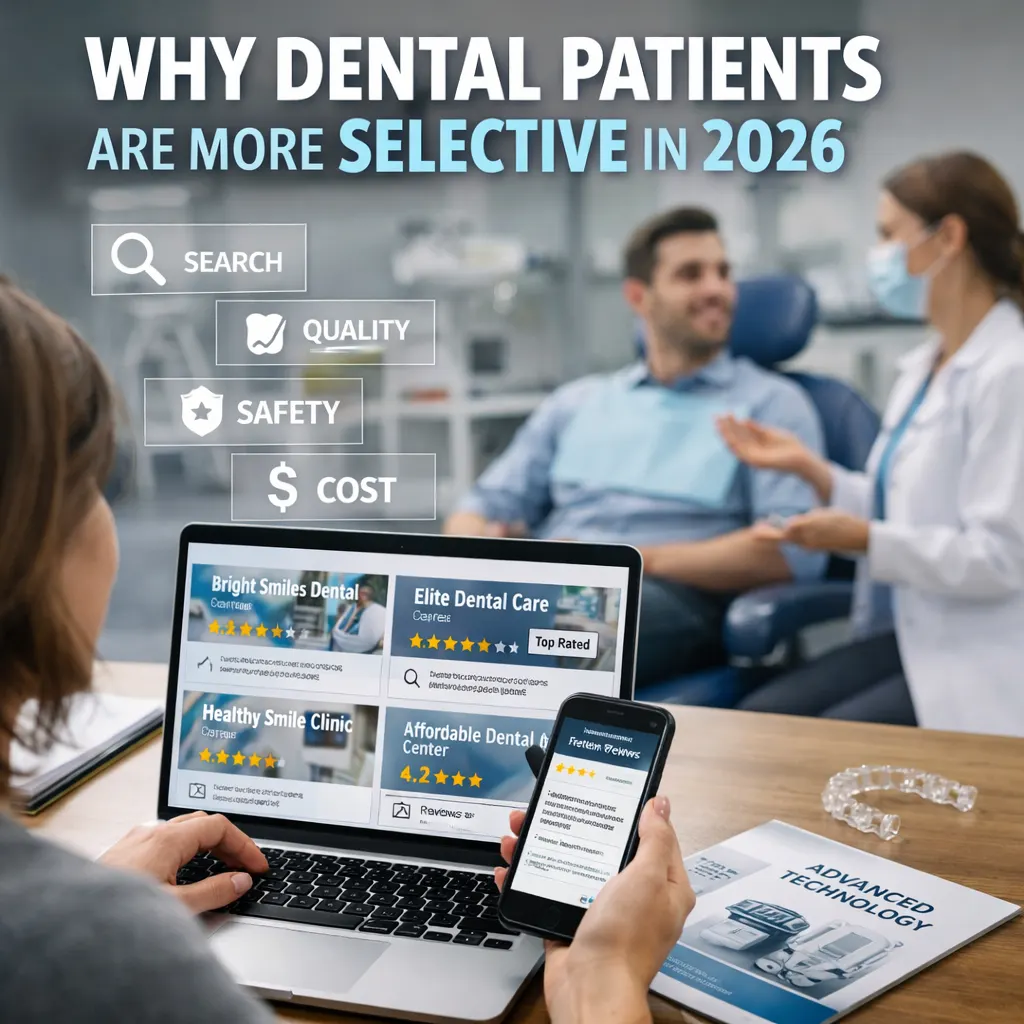
Dental patients in 2026 are more informed, more vocal, and far more selective than ever before. People no longer rely only on referrals or proximity when choosing a dentist. Instead, they turn to Google reviews, social media, online discussions, and clinic websites to evaluate credibility, treatment options, pricing transparency, and patient experience before ever making contact. Social platforms now act as research hubs where patients gather insights, compare practices, and form opinions long before booking an appointment.
Because of this shift, there is no longer a one-size-fits-all growth strategy for dental practices. Patient decisions are influenced by multiple factors—platform behavior, local competition, evolving expectations, seasonal demand, and how clearly a practice communicates trust and expertise online. What worked a few years ago may no longer resonate with today’s cautious, comparison-driven patients.
This guide explores why dental patients have become more selective in 2026 and how practices can still grow by aligning their marketing, messaging, and patient engagement strategies with how modern patients research, evaluate, and choose their dental care.
In 2026, patients have become increasingly cautious about their dental care due to financial pressures. Concerns such as inflation, stagnant insurance reimbursements, and rising treatment costs are influencing how and when your patients choose to book appointments. Many households are tightening budgets, which often leads to delays or avoidance of non-essential treatments and care.
High out-of-pocket expenses: Most dental insurance plans still cap annual coverage at $1,000–$2,000, which often isn’t enough for higher-cost procedures like crowns, implants, or orthodontic treatments. According to 2025 surveys, 72% of patients cited rising treatment costs as their top concern, followed by limited insurance coverage (50%) and unpredictable pricing (36%).
Shift away from elective procedures: Cosmetic and elective treatments (e.g., veneers, whitening, orthodontics) are often the first to be postponed during economic uncertainty. Practices heavily reliant on these services may see dips in production, as patients prioritize essential care.
Broader financial squeeze: Operational pressures in dental offices, including staffing shortages, rising supply costs, and increased overheads, can also contribute to higher fees. In order to avoid that situation, Practices need to clearly communicate value, offer transparent pricing, and provide flexible payment options to reassure patients and maintain appointment flow. Clear messaging across your website and patient-facing content also plays a role here, especially when supported by strong content marketing strategies for dentists that explain treatment value beyond just cost.
Today's patients are savvy researchers, thanks to widespread access to online resources, social media, and AI tools. Patients often arrive at appointments having self-diagnosed via Google, reviews, Reddit, or AI chatbots. They demand evidence-based treatments and clear explanations.
Reviews and testimonials play a huge role. Over 70% of patients check online reviews and social media profiles before booking an appointment, making online reputation management tips a critical part of patient acquisition.
Demand for transparency: Patients today expect complete clarity before committing to any treatment. They want upfront pricing that avoids surprises, detailed treatment plans that explain every step of the procedure, and a clear understanding of what their insurance will cover. Providing this level of transparency not only builds trust but also reassures patients that your practice values honesty and their financial comfort, encouraging them to confidently proceed with care.
Post-pandemic shifts have raised the bar for patient care.
- Patients seek "comfort-first" dentistry: Reduced anxiety through sedation options, modern amenities (e.g., Netflix during treatment, massage chairs), and personalized service.
- Convenience factors: Online booking, teledentistry consultations, flexible hours, and quick responses to inquiries. These expectations often align with the principles outlined in best practices for patient-friendly websites, where ease of use directly impacts patient decisions.
- Holistic and preventive focus: Growing awareness of oral-systemic health links means patients prefer practices that integrate overall wellness.
These factors combined mean patients are shopping around more than ever, comparing options based on cost, reviews, technology, and overall vibe.
Despite these challenges, many practices are thriving by adapting strategically. Yes, you heard it right. Growth is still possible and often accelerated—through patient-centered innovations, smart marketing, and operational efficiencies. Here are proven strategies to attract and retain selective patients:
Addressing cost concerns head-on is essential to building trust and improving case acceptance, especially as patients become more cautious and selective about their healthcare spending. If your dental treatment & care pricing feels clear and predictable, patients are more likely to be comfortable saying yes to recommended treatments instead of delaying or seeking second opinions.
Offer flexible payment options: Partner with financing providers (e.g., CareCredit) or in-house plans to make treatments accessible. This approach will keep your treatment decisions focused on health rather than price alone.
Provide clear pricing upfront: Use treatment estimation tools and straightforward explanations to outline costs, insurance coverage, and out-of-pocket expectations before treatment begins. Remember, Transparency removes uncertainty and positions your practice as honest and patient-focused.
Focus on value-based care: Preventive services are easier for patients to commit to and are often viewed as essential rather than optional. By emphasizing prevention and thoughtfully bundling these services with restorative options, practices support long-term oral health while creating a care model that feels both practical and worthwhile to patients.
Being recognized online plays a major role in modern dentistry. A strong digital presence helps attract new patients while also building long-term trust before they ever walk into your office. When patients consistently see your practice across search results, reviews, and social platforms, it creates familiarity, credibility, and confidence in your care.
Here are key digital channels that benefit dental practices more:
- Optimize for local SEO: Ensure your Google Business Profile is complete, with high-quality photos, updated hours, and prompt review responses.
- Leverage social media: Post educational content (tips, before-and-afters, and patient stories) on platforms like Instagram, TikTok, and Facebook to engage and build trust.
- Run targeted ads: Use PPC (pay-per-click) for quick new patient flow, combined with organic SEO for long-term growth.
- Encourage reviews and referrals: Implement programs that incentivize happy patients to share experiences.
These days, everybody is much inclined towards modern technology for better outcomes and experiences. Dental patients are no different and want to have the same experience during dental treatments and procedures. Below are a few popular ones.
- Integrate AI tools: AI-integrated tools have gained traction for diagnostics, treatment planning, and administrative tasks. The outcome of these tools is reduced patient interaction time. These technologies mirror trends discussed in how AI is revolutionizing patient engagement.
- Offer same-day services: Earlier crowns or aligners were a multi-day procedure, which is now reduced to a single-day CAD/CAM and 3D printing for crowns or aligners.
- Embrace teledentistry: Teledentistry is made easy, especially for consultations and follow-ups, appealing to busy or anxious patients. Robocalls and scheduled messages helped clinics to send timely reminders and notifications. Not only reminders, but they can also get confirmation over a bot call and further schedule an appointment.
Patient experience is what matters most and turns patients into loyal advocates. Below can be prioritized for patients.
- Communication: Teams can be trained on communication, where they can focus on empathy, clear explanations, and collaborative treatment planning.
- Personalize care: Teams can be trained on using patients' data to tailor personalized communication and recommendations. The same can be used during follow-ups as well.
- Build community: Hosting events, sending newsletters with health tips, and fostering relationships beyond the chair are other excellent ways to build community.
As patient behavior becomes more selective, growth depends on balancing high-value procedures with consistent, long-term care. Practices that diversify thoughtfully are better positioned to stay resilient, even during elective slowdowns.
- Expand into high-demand areas: Like clear aligners, implants, or sleep apnea treatments.
- Promote preventive and membership plans: For uninsured patients, offer direct discounts and perks.
Sustainable growth comes from knowing what’s working and responding quickly when it’s not. Practices that rely on real data instead of assumptions are better equipped to stay competitive and profitable.
- Track new patient sources, case acceptance rates, and retention.
- Review finances regularly: Optimize overhead and explore group practice models for scalability.
In 2026, selective patients aren't a threat; they're an opportunity for practices that evolve. By focusing on transparency, technology, and genuine patient relationships, dentists can not only maintain but also accelerate growth. The practices thriving today are those treating patients as informed partners, not just cases.
The dental economy may have headwinds, but resilient, adaptable practices are seeing same-store growth and higher production. Start implementing these strategies now, and position your practice for a prosperous 2026.
If you're ready to elevate your practice, consider auditing your current marketing and operations; small changes can yield big results. Your patients (and your bottom line) will thank you.
Our healthcare marketing expert will get in touch with you

.gif)