12 Best AI Search Monitoring Tools for Dental Practices
Discover the 12 best AI search monitoring tools for dental practices, who each one suits, and how to choose the right fit for your budget and team size.




Srinjoy has spent years building, scaling, and mastering the full arc of healthcare SEO and AI-driven search strategy. He helps dental and healthcare brands identify visibility opportunities, strengthen their digital market position, and turn search innovation into a sustainable patient acquisition advantage at Remedo and ConvertLens.
Harsh Bansal has spent 15 years pioneering, scaling, and redefining what dental marketing and data can truly unlock. As the CEO and Co-Founder of Remedo and ConvertLens, he is at the forefront of AI-driven dental growth, helping more than 8,000+ dental practices and DSOs worldwide attract more patients, strengthen their market presence, and gain the financial clarity needed to drive sustainable growth.

Remedo specializes in digital marketing strategies built exclusively for dental and orthodontic practices across the United States, giving our team direct insight into how AI-driven patient discovery affects appointment volume. Our recommendations are shaped by hands-on experience helping practices of all sizes improve their visibility across both traditional and AI-powered search platforms. We evaluate tools based on real-world applicability for dental teams, not just feature lists, so every suggestion reflects what actually moves the needle for a busy practice.


account
& revenue
terms
pages
call
More patients are turning to AI before choosing a dentist. They ask ChatGPT who offers the best dental implants nearby, or which cosmetic dentist they can trust. If your practice isn't mentioned in those answers, you're invisible to a growing share of potential patients - even if your website ranks on page one of Google.
As AI search optimization grows in importance, monitoring how your practice appears in AI-generated answers is no longer optional. This guide compares the 12 best AI search monitoring tools for dental practices, what each does best, pricing, and which suits your practice type.
Why AI Search Has Become So Important for Dental Practices
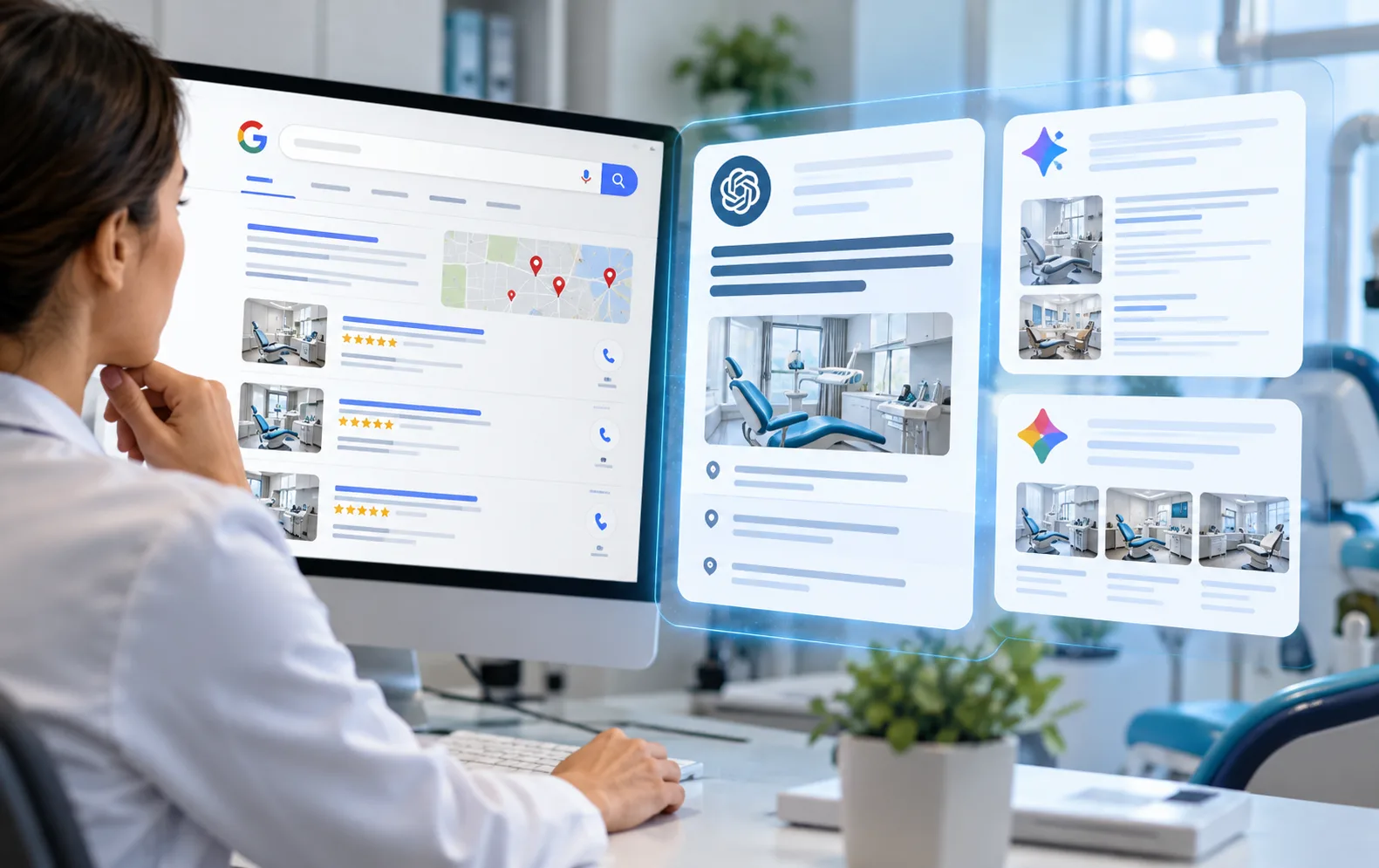
Ranking well on Google still matters, but a second layer of search has emerged alongside it. When a patient asks ChatGPT, Perplexity, or Google's AI Overviews a question, they receive a direct answer that often recommends specific practices by name.
This shift is closely tied to Answer Engine Optimization - helping AI assistants reference your practice in responses. A practice can rank at the top of Google's local results and still never appear when someone asks an AI the same question conversationally. That gap is already costing practices new patients, often without the team realising it.
What Does AI Search Monitoring Actually Mean?
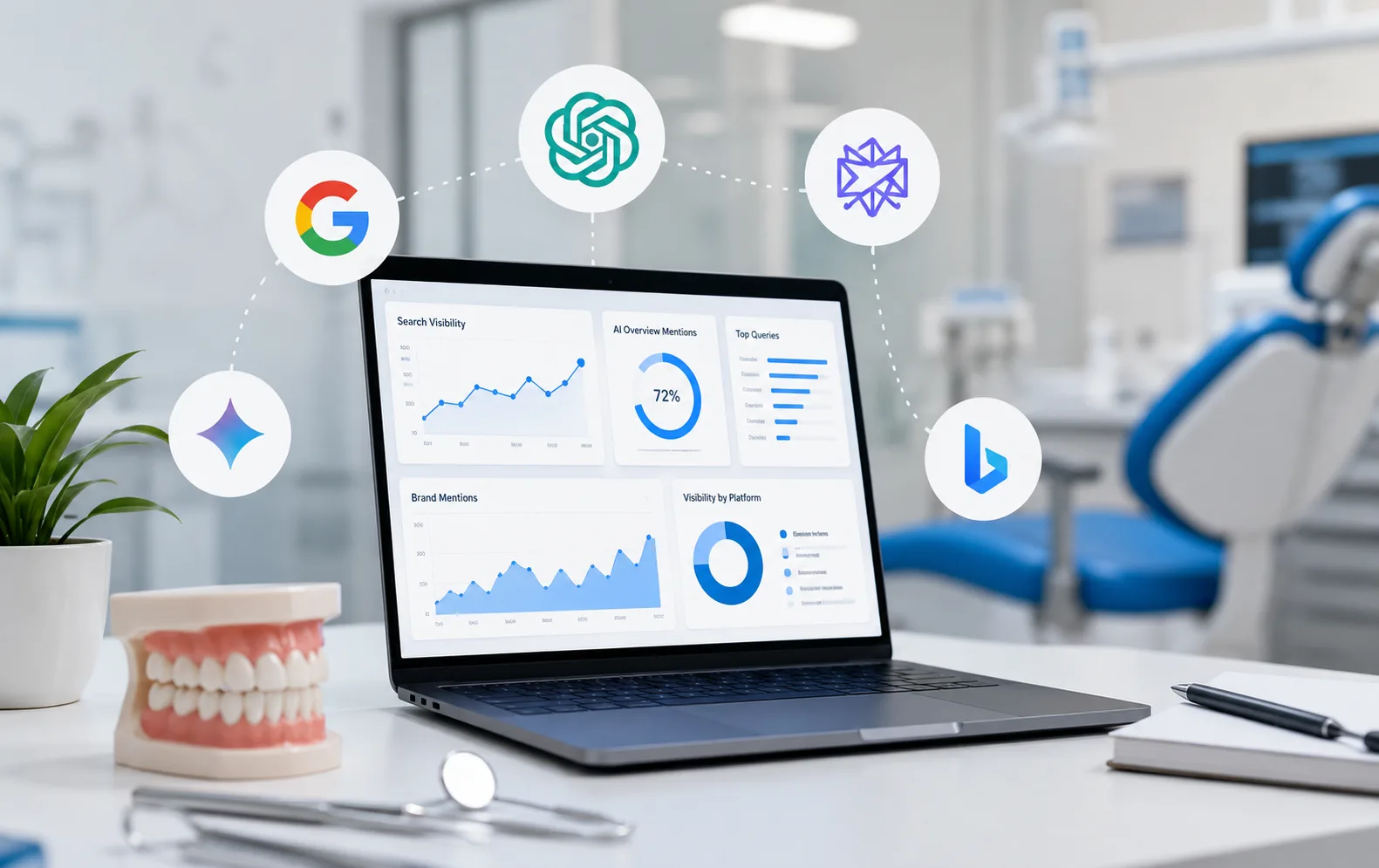
AI search monitoring checks whether AI tools mention your dental practice when patients ask relevant questions - and what exactly they say. Key terms to understand:
- Classic SEO rank tracking: Where your site appears in Google's traditional results.
- AI visibility tracking: Whether an AI engine mentions your practice in its answers.
- Citation tracking: Which sources the AI uses. Strong dental brand mentions across trusted sites improve citation likelihood.
- Brand mention tracking: Monitoring mentions across AI answers, Reddit, and other public sources AI models rely on.
A simple example makes the difference clear. Your website might rank #3 on Google for "pediatric dentist Columbus, Ohio" - that's traditional SEO. But when a parent asks ChatGPT which pediatric dentist is good with anxious kids, your practice might be missing entirely or described with outdated information. That's what AI visibility and citation tracking measure - and most dental practices aren't monitoring them yet.
The 12 Best AI Search Monitoring Tools for Dental Practices
Semrush AI Visibility Toolkit
Best for: Practices already running local SEO through Semrush. Tracks Google AI Overviews and ChatGPT citations alongside existing keyword ranking, Google Business Profile insights, and local SEO data under one login. Best as an add-on rather than a standalone purchase.
Not sure if your negative keyword list is doing its job?
We’ll review your last 90 days of search terms and show
you exactly where your budget is leaking — free, no
commitment.
Ahrefs Brand Radar
Best for: Larger dental groups already using Ahrefs. Extends its keyword and backlink engine to track AI citations, benchmarked against organic search performance. Pricing starts around $129/month - built for agencies, not lean single-practice budgets.
Otterly AI
Best for: Solo practices on tight budgets. Offers daily tracking across Google AI Overviews, ChatGPT, Perplexity, and Copilot, plus a GEO Audit that flags specific structural reasons your site isn't earning citations. The single best starting point for a solo or two-doctor practice testing the waters.
Peec AI
Best for: Practices wanting clear next steps, not just
FAQs on AI Search Monitoring Tools
What is AI search monitoring for dental practices?
It's the process of tracking whether, and how, AI tools like ChatGPT, Perplexity, Gemini, and Google AI Overviews mention your dental practice when patients ask relevant questions, so you can see and improve your visibility in AI-generated answers.
Why do dentists need AI visibility tools?
Because a growing share of patients now ask AI chatbots for dentist recommendations directly, and traditional Google Analytics or rank-tracking tools don't show you what these AI platforms are saying about your practice, or whether they're mentioning you at all.
Which AI search monitoring tool is best for small practices?
Otterly AI and Rankscale are generally the most accessible starting points for a solo or small dental practice, offering real multi-engine tracking at the lowest published price points in the category.
Can AI tools help my dental practice get cited in Google AI Overviews?
Monitoring tools themselves don't directly cause a citation, but they show you where you currently stand and what's missing. Improving schema markup, keeping reviews fresh, and creating direct answer content are some of the changes most likely to increase citation rates. Understanding Answer Engine Optimization can help you prioritize optimizations that influence AI-generated recommendations.
Get a personalized red‑flag report for your dental account
In 20 minutes, we’ll walk you through what your current agency is (and isn’t) doing — and what it’s costing you.
Are AI search monitoring tools worth it for dentists?
For most practices, yes, at least at the entry-level price points, simply because the alternative is having no visibility at all into a rapidly growing patient discovery channel. The value scales with how consistently your team acts on the findings.
What is the difference between AI visibility and SEO ranking?
SEO ranking measures where your website lands in traditional search results. AI visibility measures whether an AI model actively names and recommends your specific practice inside a generated answer - a related but distinct thing, since AI models often draw from a different mix of sources than pure web rankings.
How can a dental practice improve AI search visibility?
Start with the fundamentals: accurate Google Business Profile information, clear insurance details on your website, structured data (schema markup), recent reviews, and content written in a direct-answer FAQ style. Building strong dental brand mentions across trusted websites also improves citation likelihood. Following a comprehensive Generative Engine Optimization guide can further strengthen your visibility across AI-powered search platforms.
Do AI search monitoring tools help with local SEO?
Indirectly, yes. Several tools covered above are built directly on top of existing local SEO platforms, so improving your AI visibility and your traditional local search visibility tend to move together rather than requiring two separate strategies.
If you're ready to take a more structured approach to AI search optimization for your practice, exploring dedicated dental marketing services can help you act consistently on the insights these tools surface and turn visibility gaps into new patient growth.

1. You Cannot Access Your Own Google Ads Account
2. Reports Show Clicks, Not Patients
3. No Negative Keyword List
4. Traffic Goes to Your Homepage
5. They Don’t Know Your Cost Per Patient
6. No Call Tracking Configured
7. Budget Never Changes
8. Everything Runs in One Campaign
9. No A/B Testing Has Been Run
10. They Become Defensive on Direct Questions
What a High‑Performing PPC Agency Looks Like
Book a FREE Consultation
Book a FREE consultation
Our healthcare marketing expert will get in touch with you
.gif)