
Patients search before they choose a doctor. Before they book an appointment, before they call, before they trust their health to a practice, they type a query into Google - "dermatologist near me", "best primary care doctor [city]", "knee surgeon reviews". The practices that appear at the top of those results capture the patient. The rest are invisible at the exact moment of decision.
In 2026, ranking for medical searches is more complex than ever. A patient's results now span three distinct systems: traditional organic listings, the Google Maps local pack, and AI Overviews - the AI-generated summaries that increasingly answer health questions directly in the search results. Each system has different rules. And medicine faces a higher bar than almost any other industry because Google holds health content to its strictest quality standards.
This is the complete guide to SEO for doctors - covering every channel, every major specialty, and the compliance and credibility factors unique to medicine. Whether you run a solo practice or a multi-location group, this is the framework for turning organic search into a consistent source of new patients.
For most businesses, SEO is a marketing channel. For a medical practice, it is increasingly the front door. The way patients find and choose healthcare providers has shifted almost entirely online, and the practices that have adapted are pulling away from those that haven't.
The patient journey now begins with a search engine. Whether a patient is looking for a new primary care physician, researching a specialist their doctor referred them to, or trying to find someone to treat a specific concern, their first action is to search. A practice that does not appear prominently in those searches is not in the running - regardless of clinical excellence. You can be the best physician in your city and still lose patients to a competitor with better search visibility.
The majority of medical searches have local intent - patients want a provider near them. When a patient searches "dermatologist near me" or "urgent care [city]", Google returns a local pack of three to four practices at the top of the results. Practices outside that pack capture a fraction of the clicks. Being invisible in local search is not a minor disadvantage - it means missing the bulk of patients actively looking for the care you provide.
Paid advertising delivers patients immediately but stops the moment you stop paying. SEO works differently - it compounds. A medical practice that invests consistently in SEO builds an asset that generates patients for years, at a declining cost per patient over time. Most successful practices use both: paid ads for immediate volume and SEO for sustainable, compounding growth. The practices that rely on ads alone are renting their patient flow; the ones that invest in SEO own it.
If you have read general SEO advice and wondered why it doesn't seem to work for your practice, the reason is that medical SEO operates under stricter rules than almost any other category.
Google classifies medical websites as YMYL - Your Money or Your Life - content. These are pages where inaccurate information could harm a person's health, safety, or finances. Because the stakes are higher, Google applies more stringent quality standards before ranking medical content prominently. A restaurant's website and a physician's website are not evaluated by the same criteria. Medical content must demonstrably come from a qualified, trustworthy source before Google will rank it well.
Google's quality framework - Experience, Expertise, Authoritativeness, and Trust - is the lens through which medical content is judged. For a medical practice, this means:
Experience: Demonstrated clinical experience - years in practice, patient volume, real treatment outcomes
Expertise: Clear professional qualifications visible on the site - board certification, medical school, residency, specialty training
Authoritativeness: Recognition from credible third parties - hospital affiliations, professional association memberships, published work, media mentions
Trust: Verified practice information, genuine patient reviews, secure and compliant handling of patient data
A medical website with strong content but weak E-E-A-T signals will consistently lose to one that makes its qualifications and credibility explicit. Google is actively looking for evidence that the people behind the content are qualified to provide it.
One of the most overlooked E-E-A-T factors is content attribution. Medical content should be attributed to a named physician with visible credentials, ideally with a "medically reviewed by" signal for clinical content. A dedicated author page for each physician - listing qualifications, specialties, and experience - strengthens the credibility signals Google evaluates. The same principles that make an about page that builds patient trust effective apply to physician bio and author pages: specificity, credentials, and a human, trustworthy presentation.
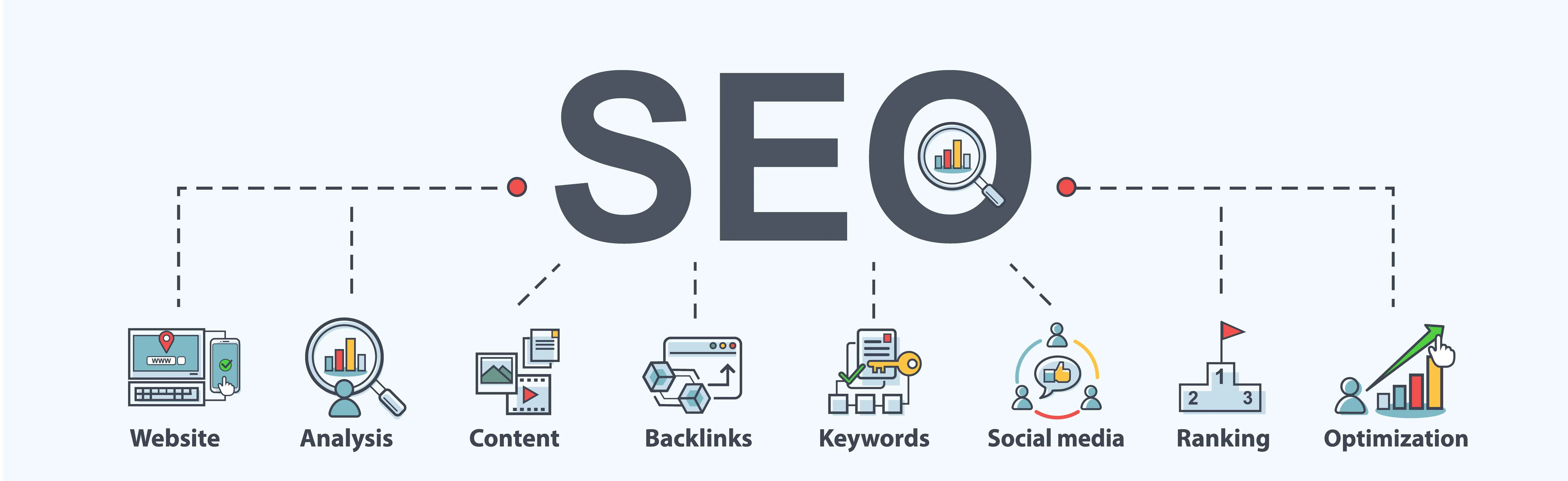
To optimise effectively, you need to understand what you are actually optimising for. In 2026, a patient's search results are shaped by three distinct ranking systems.
These are the traditional blue-link listings determined by Google's core algorithm - content quality, backlinks, technical health, topical authority, and E-E-A-T. For informational queries ("what causes high blood pressure", "how is eczema treated") and many commercial queries, organic results appear below the local pack and AI Overviews.
The local pack appears for location-based queries and is the most valuable real estate for patient acquisition. Three to four practice listings appear with ratings, reviews, hours, and contact details. Local pack rankings are driven primarily by Google Business Profile optimisation, review volume and velocity, proximity to the searcher, and local citation consistency. For most medical practices, the local pack delivers more new patients than any other search feature.
AI Overviews now appear above both the local pack and organic results for a large and growing share of medical queries - particularly informational and condition-related searches. They synthesise an answer from multiple sources, often with citations. This creates both a threat and an opportunity: informational traffic is increasingly absorbed by the AI summary, but practices cited as sources gain visibility and a ranking signal. The full AI search strategy is covered in its own section below, but the key point is that ignoring AI Overviews in 2026 means ignoring how a growing share of patients encounter health information.
For the majority of medical practices, local SEO delivers the best return of any channel. Patients want a provider near them, and the local pack is where they look first.
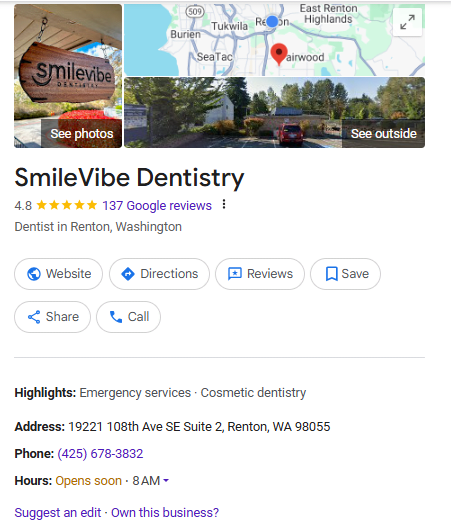
Your Google Business Profile is the single most important lever for local visibility. A fully optimised medical GBP includes:
1. Accurate primary category - the specific specialty (Dermatologist, Family Practice Physician, Orthopedic Surgeon) rather than a generic "Doctor" or "Medical Clinic"
2. Complete service listings - each service or procedure listed individually with descriptions
3. Accurate hours including any extended or weekend availability
4. Regular photo updates - facility, team, and equipment photos signal an active, established practice
5. Weekly posts - health awareness content, practice updates, new services - signalling Google the profile is actively managed
6. Pre-populated Q&A - answering common patient questions directly in the profile
A complete, actively managed GBP consistently outranks a neglected one, even when the neglected practice has stronger clinical credentials.
Reviews are among the most powerful and controllable local ranking factors - and one of the strongest trust signals for patients choosing a provider. A structured review acquisition process - an automated, personalised request sent shortly after each appointment with a direct review link - generates far more reviews than passive approaches. Respond to every review, positive and negative; for negative reviews, a calm, HIPAA-compliant response that acknowledges the concern without confirming patient details demonstrates professionalism to every future patient reading it.
Citations - consistent mentions of your practice name, address, and phone number across other websites - reinforce your legitimacy and location to Google. The priority sources for medical practices include Healthgrades, Zocdoc, WebMD, Vitals, your specialty's professional association directory, and the major data aggregators. NAP consistency is critical: even small formatting differences across listings dilute the ranking signal. The fundamentals of local citations for medical practices apply across all specialties, and getting them right is foundational to local pack performance. Understanding why local SEO matters for healthcare practices is the starting point for any practice serious about patient acquisition.
A medical group with multiple locations needs a dedicated, substantive page for each location - not a single page listing all addresses. Google evaluates each location independently for local search. Each location page should carry location-specific NAP matching its GBP, an embedded map, the physicians practising there with credentials, location-specific reviews, and LocalBusiness schema. The same coordination challenges that shape multi-location dental group marketing apply to local SEO - consistency and per-location depth are what drive results.
Medical SEO is not one strategy - it varies significantly by specialty, because patients search differently for different types of care, and the competitive landscape differs by field. This is where a general medical SEO approach falls short and specialty-specific strategy wins.
Dermatology is uniquely split between medical dermatology (insurance-driven, urgency-led searches like skin cancer screening and acne) and cosmetic dermatology (cash-pay, research-led searches like Botox and laser). These two sides require different keywords, content, and competitive positioning - and cosmetic dermatology faces competition from medspas and non-physician providers. The detailed approach is covered in our guide to SEO for dermatologists, which addresses both the medical and cosmetic patient journeys.
Surgical specialties compete for high-value, procedure-specific queries against well-funded competitors and hospital system websites with significant domain authority. Surgical SEO almost always requires a content cluster strategy - a hub page supported by detailed content on specific procedures, conditions, and recovery. Our guide to SEO for surgeons covers the specialist approach for high-value surgical patient acquisition.
Dental and orthodontic SEO is among the most competitive healthcare categories, with intense local competition and high-value procedure keywords (implants, Invisalign, cosmetic dentistry). These practices benefit most from strong local SEO combined with procedure-specific landing pages. Our dental SEO services approach is built specifically for the competitive dynamics of dental and orthodontic patient acquisition.
Primary care SEO is highly local and relatively less competitive than specialist categories. The patient is typically looking for an accessible, trustworthy provider near them who accepts their insurance. Primary care practices win through Google Business Profile optimisation, strong reviews, clear insurance information, and local content - often seeing faster results than competitive specialties because the keyword competition is lower.
Orthopedic SEO competes directly with hospital-affiliated ortho departments and large multi-location groups, so ranking usually comes down to procedure-specific pages — rotator cuff, knee replacement, sports medicine — rather than one generic "orthopedic surgeon" page trying to cover everything.
OB-GYN search splits sharply between routine, high-frequency care (annual exams, prenatal visits) and sensitive, research-heavy searches (fertility, high-risk pregnancy) — content that handles the second category with real clinical depth tends to earn more trust, and more links, than content that treats both the same way.
Pediatric SEO is really parent SEO — the person searching isn't the patient, so content needs to speak to parental anxiety directly (what to expect at a first visit, vaccine schedules, sick-visit vs. well-visit) rather than assuming the reader has any clinical familiarity at all.
This category sits furthest from mainstream YMYL scrutiny and closest to it at the same time — patients here are unusually research-driven, but Google is also more skeptical of unproven claims in this space, so visible credentialing (licensure, board certifications) matters more here, not less.
Strong content and local signals still require a technically sound website. These are the on-page and technical fundamentals every medical practice site needs.
At any position, a compelling title tag and meta description increase clicks. Medical title tags should lead with the primary keyword and a differentiator: "Board-Certified Dermatologist in [City] - Same-Week Appointments" outperforms "Welcome to Our Practice." Meta descriptions should open with a specific, concrete benefit or trust signal rather than a generic welcome line.
Structured data tells Google explicitly what your content is. The highest-impact schema types for medical websites:
1. MedicalOrganization / Physician - identifies your practice name, specialty, credentials, and location
2. LocalBusiness - the foundation for local SEO with address, hours, and contact details
3. FAQPage - applied to any Q&A section; the single highest-impact schema for SERP real estate expansion and AI Overview citation
4. Review / AggregateRating - marks up patient reviews to potentially generate star ratings in search results
A slow website undermines both rankings and patient experience. Medical websites, often image-heavy with team photos and facility images, frequently fail Core Web Vitals due to unoptimised images. Target Largest Contentful Paint under 2.5 seconds, Cumulative Layout Shift under 0.1, and Interaction to Next Paint under 200ms. Compress images, specify dimensions, and lazy-load below-the-fold content.
The majority of local medical searches happen on mobile. Google indexes and ranks based on the mobile version of your site. A medical website must render cleanly on mobile, with tap-friendly buttons, readable text, a prominent click-to-call number, and a booking process that completes easily on a phone.
Medical websites collect patient data through forms, chat tools, and booking systems - and that data is subject to HIPAA. Standard contact form plugins often do not meet HIPAA standards. Forms collecting patient health information require encrypted transmission, secure storage, and a Business Associate Agreement with the provider. SSL is the baseline. These compliance requirements are also trust signals that reassure patients submitting personal information.
Google rewards demonstrated topical authority - comprehensive, interconnected expertise across a subject - not isolated pages targeting single keywords.
A content cluster consists of a central hub page (a comprehensive guide or main service page) supported by spoke pages covering related subtopics. For a medical practice, this might mean a "conditions we treat" hub supported by individual condition pages, each linking back to the hub and to related spokes. This interconnected structure signals comprehensive authority and lifts rankings across the entire cluster simultaneously.
The most effective medical content answers the specific questions patients have on the way to booking. A page answering "should I see a doctor for [symptom]" or "what to expect at your first appointment" captures research-stage patients and guides them toward care. The key is to balance thorough, authoritative information (which establishes E-E-A-T and earns rankings) with a clear path to booking (which converts the reader into a patient).
Dedicated pages for the conditions you treat and the treatments you offer capture patients searching for those specific terms. Each should be substantive, accurate, attributed to a qualified author, and structured to guide the reader toward a consultation. These pages also feed AI Overview visibility when structured with clear, quotable answers.
Effective medical SEO starts with understanding how patients actually search - which is often different from how physicians describe their own services.

Patients search in their own language, not clinical terminology. They search "skin doctor" as often as "dermatologist", "foot doctor" alongside "podiatrist", and describe symptoms ("itchy rash that won't go away") rather than diagnoses. Effective keyword research captures both the clinical terms and the patient-language variants.
Medical queries fall into distinct categories: local queries ("[specialty] near me", "[specialty] [city]"), condition queries ("[condition] treatment", "[symptom] specialist"), and treatment queries ("[procedure] cost", "[procedure] near me"). Each warrants different content - local queries served by GBP and location pages, condition and treatment queries served by dedicated educational and service pages.
A patient searching "[specialty] near me accepting new patients" is ready to book. A patient searching "what does [condition] look like" is researching. High-intent queries should lead to conversion-focused pages with clear booking paths; research queries to educational content that builds trust and guides toward a consultation. Mapping content to intent is what separates an SEO strategy that generates patients from one that just generates traffic.
One of the most common questions from physicians evaluating SEO is how long it takes to see results - a fair question given the investment involved.
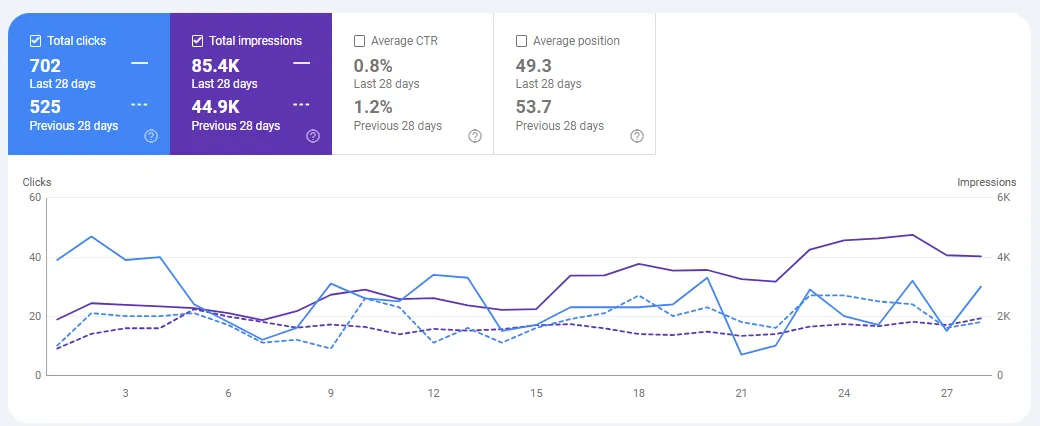
Local SEO and Google Business Profile improvements typically show results within 2-4 months. Organic rankings for competitive keywords build over 6-12 months. Paid search delivers immediately but stops when spending stops. A realistic expectation: early signals within 3 months, meaningful patient flow by 6 months, and compounding ROI from 9-12 months onward. The full breakdown is covered in our guide to how long medical SEO takes, including specialty-specific timelines.
The metric that matters is cost per acquired patient, not rankings or traffic. Track organic traffic to booking pages, form submissions, and phone bookings (via call tracking), then divide your SEO investment by patients actually acquired. Unlike paid advertising, SEO's cost per patient declines over time as rankings strengthen - which is why it is the highest-ROI channel for most practices over a 12-month-plus horizon.
This is the area most medical SEO guides have not yet caught up on - and the area where forward-thinking practices have the clearest opportunity.
Health and medical queries are among the most likely to trigger AI Overviews, because they generate enormous informational search volume with established medical answers. A patient searching "what causes migraines", "how is high blood pressure treated", or "symptoms of [condition]" now frequently sees an AI-generated summary above all other results. For medical practices, this means a significant share of informational search traffic is now answered before the click.
A zero-click search is one where the patient gets their answer directly in the results - from an AI Overview, featured snippet, or knowledge panel - without clicking through to any website. For medical practices, zero-click searches are rising fastest for informational queries. This reshapes strategy: informational content alone is no longer a reliable traffic driver, but being the cited source within a zero-click result still delivers brand visibility and a ranking signal. The detailed approach is covered in our guide to GEO strategies for healthcare websites.
Google's AI Overview citation algorithm favours content with specific characteristics:
1. Direct, quotable answers at the start of each section - a complete, factual answer the AI can extract
2. Specific, verifiable data - statistics, timelines, and figures cited from authoritative sources
3. Strong EEAT signals - named, credentialed physician authors are cited more frequently
4. FAQ schema - pages with FAQPage schema are disproportionately cited for the questions they mark up
Implementing FAQPage schema on your high-value medical pages serves two purposes at once: it expands your listing in traditional search results and significantly increases the likelihood of being cited in AI Overviews. For medical practices, where so many queries are question-based, structured FAQ content is one of the highest-leverage investments available in 2026.
AI Overviews predominantly appear for informational and condition queries ("what is", "symptoms of", "how is X treated"). They generally do not appear for high-intent local transactional queries ("dermatologist near me", "[specialty] [city] accepting new patients"), which continue to show local pack and organic results. The strategy: optimise informational content to be cited as an AI source, and invest in local SEO for the transactional queries where patient conversion actually happens.
A practical question every practice faces: handle SEO in-house or hire a specialist. The honest answer depends on your resources and goals.
Google Business Profile optimisation, review acquisition, responding to reviews, basic content updates, and maintaining accurate practice information are all manageable in-house with consistent effort. These fundamentals deliver meaningful results and require no specialist tools.
None of the DIY work above requires expensive software to get started, but a handful of tools make it meaningfully faster. This isn't an exhaustive list, and naming a tool here isn't an endorsement or a paid placement — just what tends to show up in practices that manage their own SEO reasonably well:
Technical SEO (Core Web Vitals, schema implementation, site architecture), competitive content production at scale, link building, and ongoing strategy generally benefit from specialist support. Practices in competitive markets or specialties, or those without in-house marketing resource, typically see a stronger return from working with a specialist than from a part-time DIY effort.
When evaluating a medical SEO agency, look for healthcare-specific experience - SEO for medicine is different enough that general agencies often underperform. Ask for specific, verifiable results achieved for comparable medical practices, not guarantees (which are meaningless in SEO). Confirm they understand YMYL, E-E-A-T, and HIPAA-compliant marketing. And be wary of any agency promising page-one rankings in 30 days or guaranteeing specific positions - both are red flags. The same diligence that goes into choosing any healthcare marketing partner applies: prioritise demonstrated healthcare results over broad promises.
Patients are searching for doctors in your area right now. The practices that appear at the top - in the local pack, in organic results, and increasingly as cited sources in AI Overviews - are the ones filling their schedules from search. The rest are leaving patients to their competitors.
Remedo builds and manages SEO strategies for medical practices across every specialty - local SEO, technical SEO, content, and AI search optimisation, all built around the YMYL and E-E-A-T standards that medical search demands. Every strategy is measured to patient acquisition, not vanity metrics.
Explore Remedo's healthcare SEO services ->
If you want to know exactly where your practice ranks today - and the specific, fastest opportunities to capture more patients from search - request a free SEO audit.
Get your free medical practice SEO audit ->
Medical SEO is the practice of optimising a doctor's or medical practice's website and online presence to rank higher in search engines, so that more patients find the practice when searching for care. It includes local SEO (Google Business Profile, reviews, citations), on-page SEO (content, technical health, schema), and increasingly AI search optimisation. Because Google classifies medical content as YMYL, medical SEO requires stronger expertise and trust signals than SEO in most other industries.
Most medical practices see local search improvements within 2-4 months and meaningful organic patient flow within 6 months. Competitive keywords can take 9-18 months to reach page one. Local SEO typically produces results fastest, while organic and content-driven rankings compound over a longer horizon. A realistic plan assumes early signals within 3 months and positive ROI by 9-12 months.
Medical SEO from a specialist agency typically ranges from $1,500-$5,000 per month for a single-location practice, and $3,000-$10,000+ per month for multi-location groups or practices in competitive markets and specialties. The relevant measure is cost per acquired patient - for high-value specialties, even a substantial monthly investment delivers strong returns when measured against patient lifetime value.
Local SEO targets the Google Maps local pack for location-based searches ("doctor near me"), driven primarily by Google Business Profile, reviews, and local citations. Organic SEO targets the traditional results below the local pack, driven by content, backlinks, and technical health. For most medical practices, local SEO delivers faster results and higher patient conversion, while organic SEO builds long-term authority and captures informational searches. Both are necessary.
Yes. Even referred patients typically search for the doctor's name, read reviews, and visit the website before confirming an appointment - meaning your online presence influences referral conversion. A weak or hard-to-find web presence can cost you referred patients who research you and aren't reassured by what they find. SEO also reduces dependence on any single referral source, building a direct patient acquisition channel the practice controls.
AI Overviews reduce click-through for informational health queries by answering them directly in search results. However, they generally do not appear for high-intent local queries ("doctor near me", "[specialty] [city]"), where patient conversion happens - so their impact on direct patient acquisition is limited. The strategy is to structure your content (with FAQ schema, direct answers, specific data, and strong author credentials) to be cited as a source in AI Overviews rather than bypassed, which also strengthens your traditional rankings.
Yes, more than most guides admit. A dermatology practice competing on cosmetic procedures and a primary care practice competing on local convenience are playing genuinely different games, even though both get filed under "medical SEO" — see the specialty breakdown above.
Fewer than most vendors would like you to think. Free tools (Search Console, Google Business Profile) cover most of the DIY work covered in this guide — paid tools mostly save time rather than add capability on the fundamentals.
Our healthcare marketing expert will get in touch with you


.gif)