

You only pay what you spend on your Google Ads, no commission or hidden charges
Cosmetic dentistry has always been one of the most research-driven areas of dental care. Unlike someone searching for an emergency dentist, cosmetic patients rarely book after a single search. They compare treatments, explore smile transformations, evaluate different providers, and often spend weeks or even months deciding who they trust with their smile.
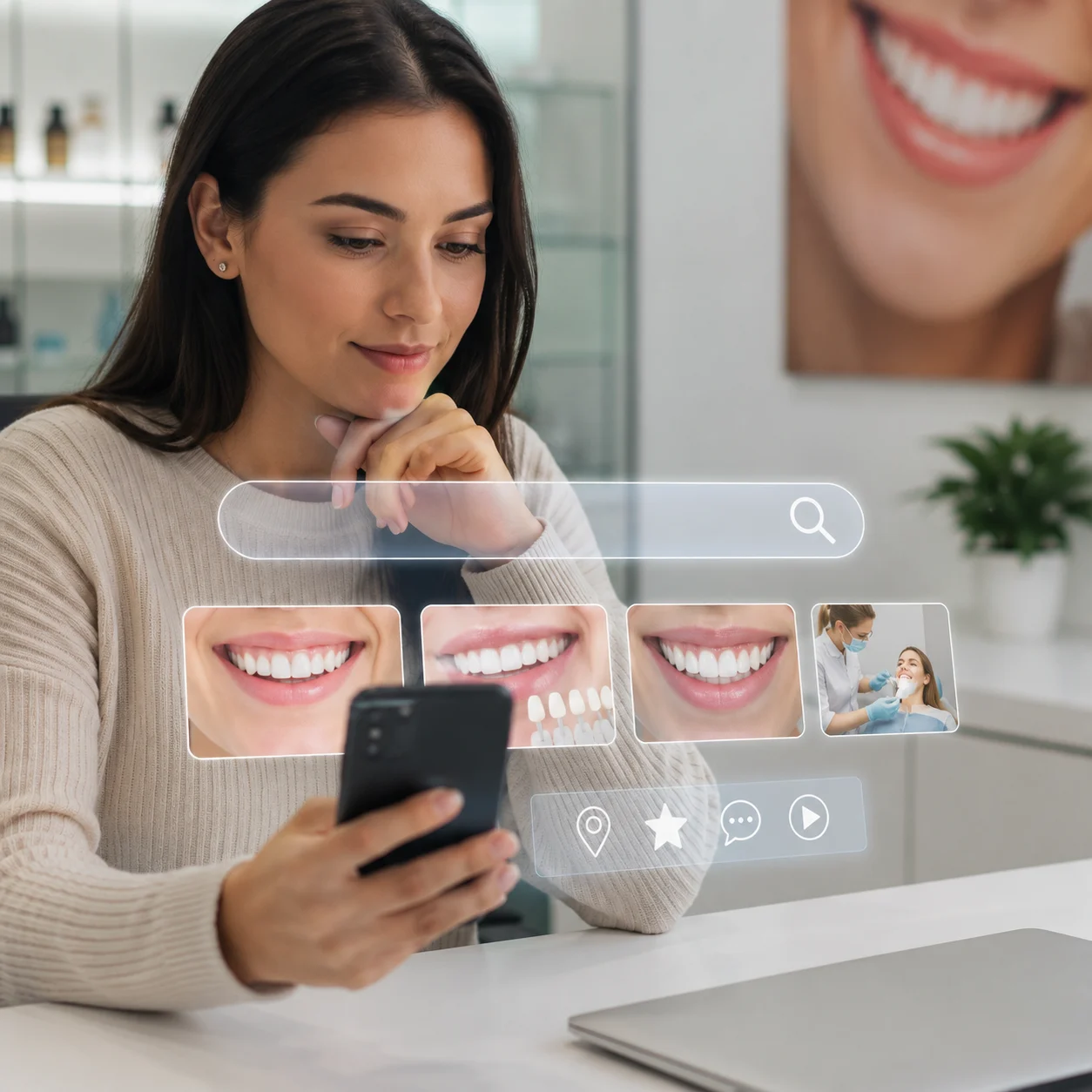
That journey is changing quickly. Search is no longer limited to Google. Prospective patients are discovering cosmetic dentists through AI search, social media, video platforms, online reviews, and conversational searches that help them compare treatments before they ever visit a practice's website. For cosmetic dentists, that's a completely different patient journey to understand and optimize for.
The biggest opportunity for cosmetic dental practices lies in understanding how today's patients search, what influences their decisions, and where they're finding information before they book. The better you understand those changing behaviors, the easier it becomes to create content, improve your online visibility, and position your practice in front of patients who are actively looking for the treatments you provide.
Read on in this guide to understand exactly how cosmetic dentistry search habits are changing and what your practice can do to stay one step ahead.
To market your cosmetic dentistry services successfully, you first need to understand how patients make decisions today. The consultation doesn't begin when they call your office. It begins the moment they start researching their smile.
Patients typically:
Simple. Linear. Predictable.
For many practices, that was enough. Patients often made their decision based on location, basic information, and a few before-and-after photos. Your website didn't need to be highly detailed, and a basic Google Business Profile was often enough to generate new consultations.
Today's cosmetic dentistry patients follow a much longer decision-making process.
Instead of relying on only a few online interactions, patients now move among search engines, AI tools, review platforms, social media, videos, and dental websites before booking a consultation.
So, your next move is clear: your practice needs to be visible wherever patients are researching, from AI search and social media to online reviews and educational content.
More importantly, patients often search for problems before treatments. Someone is more likely to search "how to fix uneven teeth" than "composite bonding." Practices that answer those questions early are far more likely to earn trust and win the consultation.
Searches for cosmetic dentistry are becoming longer and much more conversational. Instead of typing a few keywords, patients are asking complete questions about treatments, costs, results, and their specific concerns. AI search tools and voice search are accelerating this shift, making generic keywords less valuable than they once were.
For example, instead of searching "veneers cost," patients now ask questions like "How much do veneers cost for two front teeth?" Rather than searching "cosmetic dentist," they ask, "Which cosmetic dentist is best for natural-looking veneers?" These searches reveal much stronger intent and make it easier to understand exactly what patients want.
This changes how cosmetic dentistry content should be created. Instead of relying on one general service page, practices should publish content that answers specific patient questions, compares treatments, explains common concerns, and guides patients through each stage of their decision-making process.
One of the biggest changes in cosmetic dentistry search is that patients usually search for the problem first, then discover the treatment. Most people don't know whether they need veneers, composite bonding, or Invisalign. They simply know they want to improve their smile.
For example, instead of searching "composite bonding," patients are more likely to search "how to fix a chipped front tooth." Rather than searching "veneers," they ask "how to close a gap between my front teeth?" or "how can I improve a gummy smile?"
This changes the way your website should be structured. Instead of creating only treatment pages, build content around the problems patients are trying to solve. Then naturally guide them to the treatments that best address those concerns.
A simple content structure could include:
This approach helps you reach patients earlier in their research, answer the questions they're already asking, and naturally lead them toward booking a consultation.
Cosmetic dentistry is inherently visual. Patients want to see proof of results before contacting a practice. But the way they consume visual content has changed significantly. Instead of relying only on website galleries, they're exploring smile transformations across YouTube Shorts, Instagram Reels, TikTok, Google Images, and even AI-powered smile simulations.
During their research, patients commonly review:
Patients are discovering cosmetic dentistry content across multiple platforms, including
Many practices still rely on heavily edited before-and-after photos. The problem is that today's patients want authenticity, not perfection.
The strongest cosmetic dentistry content usually shows:
For cosmetic dentists, visual content is no longer just about showing great smiles. It's about helping patients imagine what their own smile could look like and giving them the confidence to take the next step.
Patient reviews have evolved far beyond simple star ratings. They have become one of the most trusted sources of information for people researching cosmetic dentistry. Before booking a consultation, many patients read through reviews to understand not only the final results but also what the experience was actually like.
They're looking for answers to questions they already have, including:
Every review helps tell your practice's story. Honest comments about natural-looking smiles, clear communication, comfortable treatment, and a positive overall experience often influence future patients far more than promotional marketing ever will.
That's why reviews should be an active part of your marketing strategy. Encourage satisfied patients to leave honest feedback, make the process simple, and respond professionally to every review. A steady stream of genuine reviews builds trust with both prospective patients and search engines, and understanding the impact of patient reviews on SEO can help practices make reviews a more strategic part of their online presence.
Cost remains central to cosmetic dentistry research, especially because most treatments are elective and usually aren't covered by insurance. But what's changed is that patients now compare value, not just price.
Instead of simply searching for treatment costs, patients are asking more detailed questions like
Search interest around financing and affordability is also growing rapidly. More patients are researching payment plans, flexible financing, and ways to spread the cost before they ever contact a practice.
That's why pricing pages need to do more than list numbers. Patients want to understand what's included, what affects the final cost, whether financing is available, and what they can realistically expect from their investment. The practices that answer those questions clearly often earn more trust long before the consultation begins.
Patients are increasingly using AI-generated search summaries and conversational AI tools to ask questions about treatments and providers. This is fundamentally changing how search visibility works.
For example, instead of searching "cosmetic dentist near me," patients now ask questions like "Which cosmetic dentist is known for natural-looking veneers?" or "Who offers smile makeover financing near me?" Rather than showing a long list of websites, AI tools recommend practices that best match the patient's needs.
For cosmetic dentists, this creates a valuable opportunity. Practices with detailed service pages, authentic patient reviews, complete Google Business Profiles, and helpful educational content are much more likely to be recommended when patients begin searching this way.
According to recent consumer behavior trends, more patients are using their phones to research and contact dental practices. Cosmetic dentistry is especially mobile-driven because patients often browse treatments, compare practices, and check reviews when they have a few minutes during the day or outside normal office hours.
This matters because a great-looking website doesn't help much if patients can't easily use it on their phone. They need to find treatments quickly, view before and after results, understand financing, and take the next step without having to work for it.
Essential mobile features for cosmetic dentistry practices:
Cosmetic patients often need reassurance first. Give them useful next steps, whether that's exploring a treatment, asking a question, requesting a consultation, or booking when they're ready.
Social media is now an important part of how cosmetic dentistry patients discover and evaluate practices. A patient may find you through Instagram, TikTok, YouTube, or Facebook, then visit your profile to see your work, read reviews, and get a feel for your practice.
Patients may discover your practice through:
The content that works best is usually simple and useful:
You can also repurpose one useful video into several posts, Shorts, FAQs, or blog content. This keeps your social media active without creating everything from scratch. For additional ideas, practices can explore these short videos and other video formats that help explain treatments and build trust.
Patients often compare treatments before choosing a cosmetic dentist. They want to understand their options, what each treatment can achieve, and which one may suit their smile and budget.
Common comparisons include:
Good comparison content should explain the key differences without making one treatment sound right for everyone. Cover the benefits, limitations, treatment time, durability, cost factors, and whether the treatment is reversible.
Most importantly, remind patients that the right choice depends on their teeth, bite, oral health, and cosmetic goals. This gives patients useful information while showing that your practice is focused on helping them make the right decision.
Understanding how cosmetic dentistry patients search, compare, and make decisions starts with collecting the right information. You don't need complicated research to get useful insights. Your own patients, website data, reviews, and search behavior can tell you a lot about what people want to know before booking.
Here are some practical ways to collect that information:
Our healthcare marketing expert will get in touch with you

.gif)