.png)
Here is a scenario that plays out in dental offices around the world—thousands of times every single day. A patient sits in the chair, receives a thorough examination, and is presented with a treatment plan. The dentist walks through the diagnosis carefully, explains the clinical necessity, and hands over a printed recommendation. The patient nods, says they'll "think about it," and walks out the door. The front desk staff logs the unscheduled treatment in the practice management system. And then… nothing happens.
No follow-up call. No reminder email. No gentle nudge at 72 hours, or one week, or six weeks later. That treatment plan, worth anywhere from a few hundred to several thousand dollars, quietly fades into the background noise of a busy practice. Multiply that by dozens of patients every month, and you begin to understand why the American Dental Association has estimated that the average practice has between $500,000 and $1 million in dormant, unscheduled treatment sitting idle in patient charts. Not because patients don't need the care. Not because they can't afford it. Simply because no one followed up on them.
Clinics that consistently convert inquiries into appointments usually rely on structured dental lead nurturing strategies that combine reminders, personalized messaging, and timely follow-ups.
Automated patient follow-up systems exist to close that gap systematically, professionally, and without placing another burden on your already-stretched front desk team.
This guide explores everything dentists and practice managers need to know about implementing automated follow-up to meaningfully increase case acceptance, reactivate lapsed patients, reduce no-shows, and build a more predictable, profitable practice for the long term.
Many dental practices depend on the front desk team to follow up with patients who have recommended but unscheduled treatment. While the intention is good, the reality inside a busy clinic makes this approach difficult to execute consistently. The challenge is not staff commitment; it is the operational pressure of a modern dental practice.
Reception teams juggle a wide range of responsibilities throughout the day: answering calls, managing appointment schedules, processing payments, handling insurance queries, and supporting patients at the desk. With so many immediate priorities, proactive follow-up calls to patients with pending treatment often become a task pushed to quieter moments, and those moments rarely appear in a busy practice.
Many clinics combine automated follow-ups with live chat tools for dental patient inquiries to ensure potential patients receive immediate responses and continued communication afterward.
Industry data suggests that a significant portion of incoming patient calls never convert into booked appointments. In many cases, this happens because the practice team simply does not have the capacity to respond or follow up at the right time. When missed calls and unscheduled treatment cases accumulate, the financial impact can become substantial for the practice.
Dental organizations frequently report that a large volume of recommended treatment remains unscheduled in patient records at any given time. When a structured follow-up system is introduced, even a modest improvement in patient re-engagement can translate into significant recovered production. For many clinics, converting a portion of this existing treatment demand represents one of the most efficient ways to increase revenue without increasing marketing spend. While many practices focus on advertising and SEO as strategies to attract new dental patients, consistent follow-up communication is what ultimately converts interest into confirmed appointments.
Automated patient follow-up platforms address the core limitation of manual systems—inconsistency. Automated workflows operate on predefined schedules, ensuring every patient receives timely reminders and follow-up messages. Communication remains consistent regardless of how busy the practice becomes.
Automated communication becomes much more effective when it is integrated into a clear dental patient funnel strategy that guides potential patients from initial inquiry to treatment acceptance.
These systems can track responses, organize conversations, and escalate messages that require staff attention. As a result, the team focuses only on engaged patients rather than spending hours on manual outreach.
Research across healthcare and dental practices shows that structured automated follow-up campaigns significantly improve patient response and appointment conversion rates. Modern clinics are increasingly using AI-powered patient engagement tools to automate reminders, answer patient questions, and maintain ongoing communication after consultations. Appointment reminders, SMS follow-ups, and multi-touch communication sequences all contribute to fewer missed appointments and stronger patient re-engagement.
Automated patient communication systems are increasingly adopted by dental clinics worldwide. Practices in the UK, Australia, Europe, and other regions are implementing digital patient engagement tools to maintain consistent communication and reduce operational pressure on staff.
In highly competitive private dental markets, practices that implement structured follow-up systems often retain patients more effectively. Successful dental practices understand that converting prospects into loyal patients requires consistent communication, trust-building, and well-timed follow-ups after the first interaction. Consistent communication not only improves treatment acceptance but also strengthens patient relationships and long-term practice growth.
Not all automated follow-up serves the same purpose. A comprehensive patient communication strategy addresses six distinct scenarios, each with its own timing, tone, and channel strategy. Here's a breakdown of each category and what best practice looks like within it.
This is the highest-value category and the most commonly neglected. When a patient leaves without scheduling recommended treatment, an automated sequence should trigger within 24–48 hours. The first touchpoint acknowledges their visit, references the specific treatment discussed (personalization is critical), and offers an easy path to scheduling. The tone should be warm and health-focused instead of transactional. Follow-up messages should always include conversion-focused call-to-action strategies that encourage patients to schedule their appointments or confirm recommended treatments.
The sequence should span multiple touchpoints over 2–6 weeks, using SMS, email, and (for high-value or time-sensitive treatments) a personal call from a treatment coordinator. Research suggests that follow-up loses its effectiveness beyond the third or fourth contact—if a patient hasn't responded after 3–4 touchpoints, shift to a written communication inviting them to call when they're ready, and flag them for a reactivation campaign in 3–6 months.
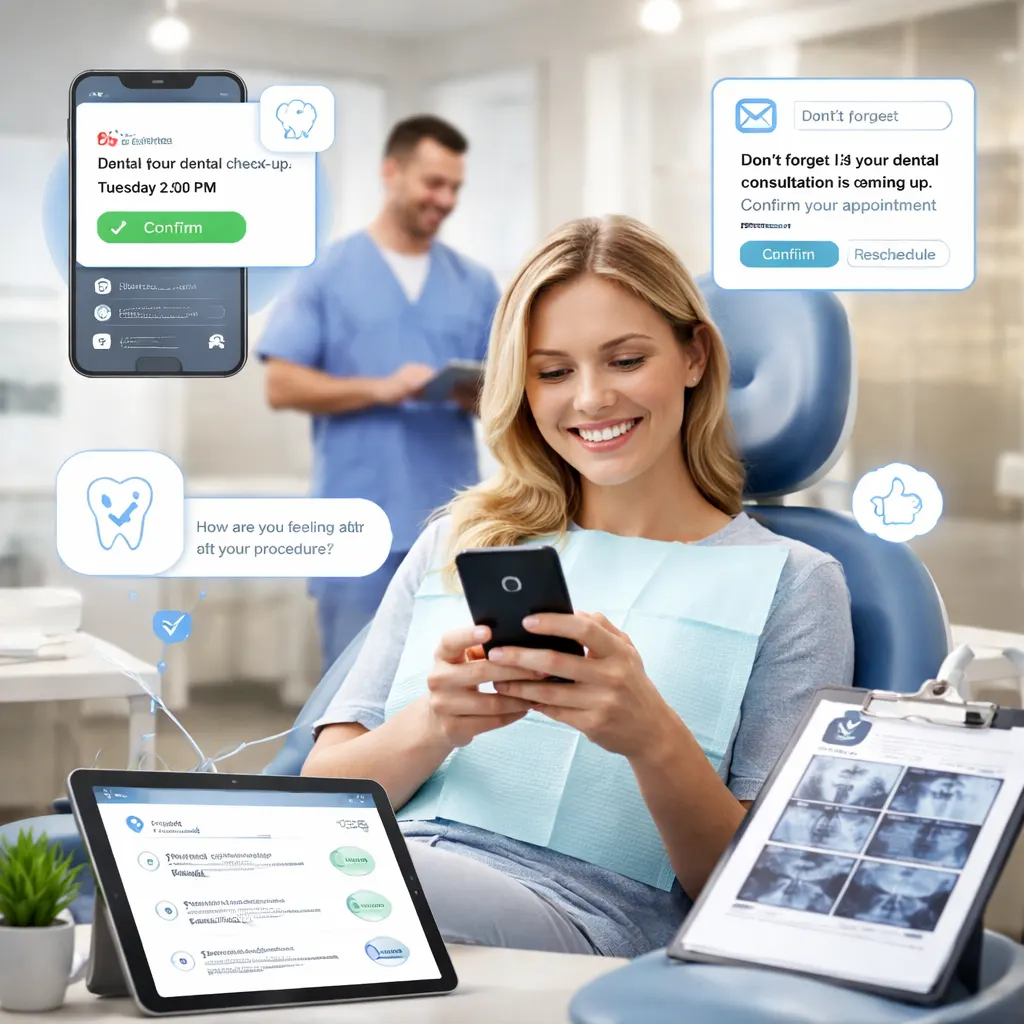
No-shows are one of the most expensive operational problems in dental practice; a single daily no-show can cost between $5,000 and $50,000 annually per provider in lost revenue. Automated appointment confirmation sequences are the proven solution. A best-practice sequence typically includes a confirmation request 5–7 days before the appointment, a personalised reminder 48 hours prior, and a same-day morning reminder via SMS.
SMS demonstrates the highest effectiveness among communication channels for reminders, with research showing confirmed appointments via text achieving no-show rates as low as 1.90%. Patients should be able to reply "C" to confirm or "R" to reschedule directly, reducing friction and staff burden simultaneously.
Recall—bringing patients back for their 6-month (or appropriate interval) hygiene appointment—is the lifeblood of a dental practice's recurring revenue. Patients who remain current with their hygiene appointments have dramatically higher treatment acceptance rates, higher lifetime value, and refer at higher rates than episodic patients. Yet many practices still manage recall manually, losing patients to attrition year over year. Practices that implement regular post-visit follow-ups often discover new opportunities for strategies to increase patient referrals through satisfied patients.
An effective automated recall system sends a sequence beginning 4–6 weeks before the patient's due date, escalating through SMS and email, with a task created for personal phone outreach if the patient doesn't self-schedule after 2 automated touchpoints. Personalised messages that reference the patient's last visit date and specific care history ("Since your last visit, Dr. Chen recommended a fluoride treatment—your next cleaning is due!") dramatically outperform generic reminders.
A patient who hasn't visited in 12–18+ months is considered "lapsed" or "inactive." This group represents significant recoverable revenue; the average active patient generates approximately $650 per year in production. With an average patient lifetime of 8 years, that's $5,200 in lifetime value sitting dormant for every lapsed patient you fail to reactivate.
Reactivation campaigns should use a multi-channel approach—text, email, and potentially direct mail for long-lapsed patients—and should feel personal rather than promotional. The message should focus on the patient's oral health journey, remind them of their care history at the practice, and create gentle urgency without pressure. Some practices find that offering a one-time incentive (free fluoride treatment, complimentary whitening consultation) for reactivation appointments meaningfully improves response rates.
Many successful clinics rely on patient retention email strategies to send reminders, educational content, and treatment follow-ups that keep patients engaged with the practice.
Following up after a treatment serves two underappreciated purposes. First, it demonstrates genuine care for patient well-being—a 24–48 hour check-in after a significant procedure ("How are you feeling after your crown placement yesterday?") is one of the strongest trust-builders available to a practice, and it catches complications early when intervention is simpler and less costly. Second, post-treatment follow-up is the ideal moment to request online reviews, as patient satisfaction is highest in the first 24–72 hours after a positive experience.
Automated follow-up workflows can also include automated review request strategies that encourage satisfied patients to share their experiences online.
Healthcare providers that implement personalised post-treatment communication strategies have seen patient satisfaction increases of up to 25% within 6–12 months, alongside meaningful reductions in administrative burden. Automated satisfaction surveys sent 24 hours post-appointment also provide invaluable practice management data and allow unhappy patients to express concerns privately before posting a negative public review.
When a patient cancels or misses an appointment, the window for recovery is narrow. An automated follow-up within 1–2 hours—not days—of a missed or cancelled appointment dramatically improves rescheduling rates. The message should be warm, not accusatory, and should include a one-tap scheduling link to minimize friction. Patients who cancel and receive no follow-up within 48 hours have a significantly lower probability of ever rescheduling, making speed the critical variable in this category.
Among all patient communication workflows, follow-up for unscheduled treatment carries the greatest commercial impact. A carefully structured sequence helps dental practices convert pending treatment plans into confirmed appointments while maintaining a professional and patient-centered approach. Leading practices often use a balanced mix of automation and human outreach to achieve consistent results.
A short, friendly message is sent shortly after the patient’s visit to keep the recommendation fresh in their mind. The tone should be warm, personal, and action-focused.
Example:
“Hi [Name], thank you for visiting today. Dr. [Name] recommended [treatment] to help protect your smile. If you’d like to schedule, simply reply here or book online: [link].”
The goal is to acknowledge the visit, reinforce the recommendation, and make scheduling simple.
A follow-up email provides helpful context around the recommended treatment. This message explains the purpose of the procedure in clear language, highlights the long-term benefits for oral health, and answers common patient concerns such as timing or cost.
Including flexible booking links and financing information can further encourage patients to move forward with scheduling.
A gentle check-in message helps reopen the conversation without pressure. At this stage, patients may have questions or hesitations that prevented them from booking earlier.
Example:
“Hi [Name], just checking in regarding Dr. [Name]’s recommendation for [treatment]. If you have any questions or would like help booking, feel free to reply here or call us at [number].”
This step focuses on removing barriers and encouraging dialogue.
For higher-value treatments, a personal call from a treatment coordinator or team member can significantly improve scheduling rates. Reviewing notes from the patient’s chart allows the conversation to feel more tailored and supportive.
A brief, friendly call reassures the patient, answers remaining concerns, and helps them secure a suitable appointment time.
The final message acknowledges that the treatment recommendation is still available while respecting the patient’s decision timeline. It briefly reminds them why the treatment matters and provides easy ways to schedule.
If no action is taken, the patient can then transition into the practice’s regular recall or reactivation communication cycle.
Our healthcare marketing expert will get in touch with you

.gif)